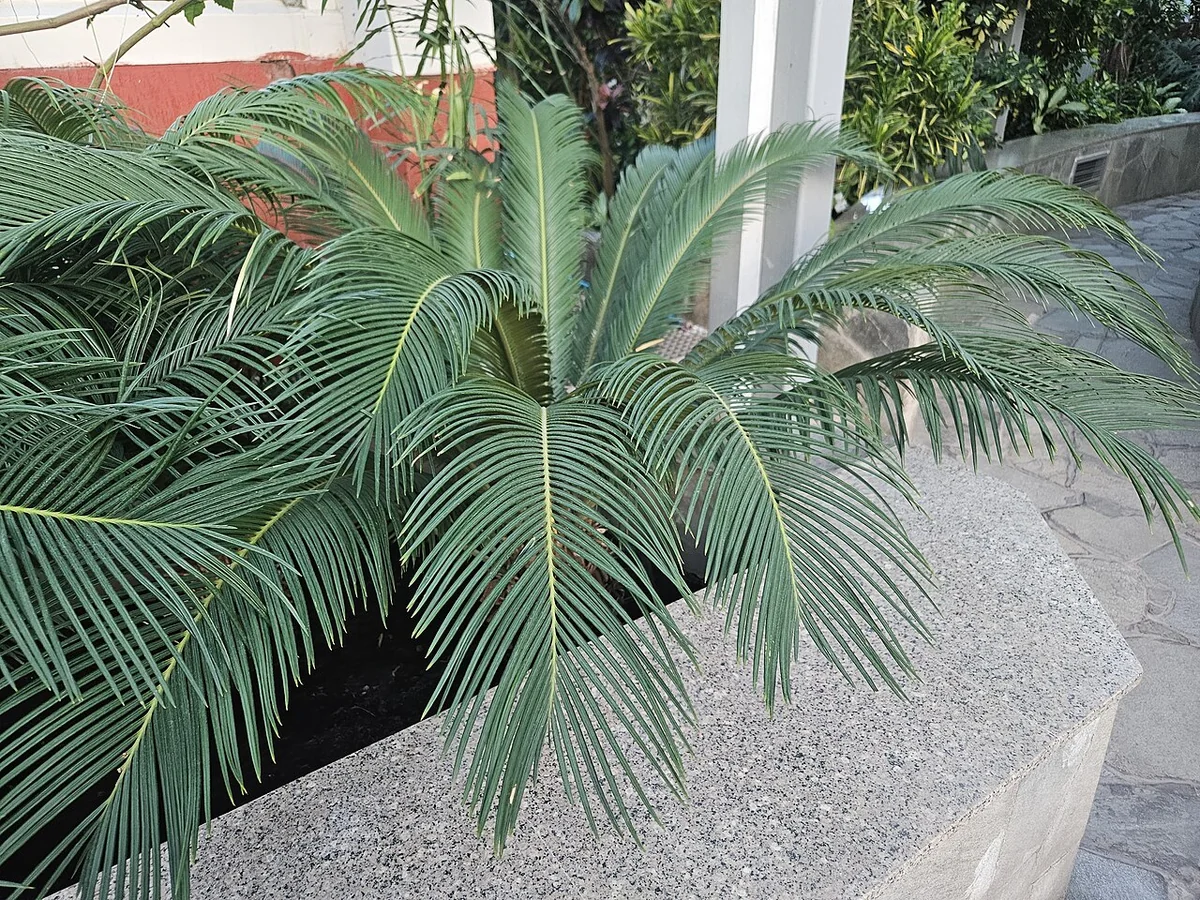
Cycad Identity Comes before Decoration
The plant sold as sago palm is not a palm. Cycas revoluta is a cycad, a seed plant in an ancient lineage that differs fundamentally from flowering palms. Its stiff, glossy leaves rise in a symmetrical crown above a slowly thickening stem, giving it a sculptural presence at a relatively modest container size. That form makes it tempting for indoor decoration, but two facts should come before appearance: it requires good light, and all parts are toxic if eaten. A home with animals or children likely to investigate the plant is not an appropriate place for an accessible specimen.
The species is native to southern Japan, including the Ryukyu region, with some botanical references also describing nearby Asian populations. Its family history can inspire interest in plant evolution, but calling an individual pot a living dinosaur exaggerates the relationship. Modern species belong to lineages with long histories; the nursery plant itself is not a fossil transported unchanged through geological time. The name revoluta refers to the rolled margins of its narrow leaflets. Looking closely at that feature provides a more tangible connection with botanical identity than relying only on the familiar but inaccurate palm label attached to the pot.
Light, Drying, and Household Clearance
Give it bright filtered light and introduce suitable direct sun gradually. A sunny room or conservatory is more realistic than a dim office, especially if the aim is compact, sturdy replacement leaves. A flush formed in inadequate light can remain elongated and weak after the plant is moved. Arrange the position before new foliage expands rather than trying to repair its shape later. The rigid leaflets and pointed crown also require physical clearance. Do not place it at face height beside a narrow doorway or at the edge of a desk where people reach across it to use everyday equipment.
Water thoroughly only after the upper medium has dried meaningfully, then let the container drain. The cycad is not a continuously thirsty tropical palm despite the shop name. A thick stem does not make waterlogging harmless, and a potted plant with inactive roots can remain wet for a long time in winter. Check beneath any surface gravel. If the base or crown begins softening, investigate the root environment promptly instead of adding more water to encourage leaves. Conversely, a plant producing a fresh flush needs careful observation so the developing growth is not repeatedly subjected to severe drying.
Root Aeration and Distinct Leaf Flushes
Use a very open, draining mix suitable for cycads or similarly structured container plants. Keep the stem base at its existing level, and select a pot matched to the root system rather than an oversized ornamental tub. During repotting, handle the rigid foliage with appropriate protection and avoid unnecessarily damaging the roots. A stable heavy container can support the crown without requiring a deep reservoir of wet compost. Check every outlet. A handsome cachepot whose bottom remains inaccessible makes it harder to manage precisely the conditions most likely to threaten a slow-growing specimen.
Leaf production can occur in distinct flushes rather than as a continuous stream. A quiet interval is not automatically a problem to correct with strong fertilizer. When new leaves emerge, protect them from bumps, abrupt exposure changes, and inconsistent care while they are still soft. Their final outline becomes fixed as they harden. Do not repeatedly turn or rearrange the pot merely to make the young crown face an ideal decorative direction. Record the timing and shape of successive flushes. That information can reveal whether the light and root routine are suitable more clearly than the apparent lack of change between them.
Conserving Foliage and Managing Toxic Plant Material
Remove completely spent leaves carefully, retaining useful green foliage. The temptation to strip the trunk for a tidy symmetrical outline can leave too little working leaf area. Never cut into the central growing point as a way of making the plant shorter. Offsets may be propagated by knowledgeable growers under appropriate conditions, but cutting apart a recently purchased plant is unnecessary routine maintenance. Feed modestly while growth and conditions support it, following a suitable label. Extra nutrition will not transform a young cycad into an old trunked specimen quickly, and it does not reverse leaves already formed in poor light.
Scale is a significant inspection concern on cycads. Examine both leaf surfaces, the leaflet bases, and the protected crown rather than judging from the glossy upper canopy alone. Pale or crusted areas require identification before treatment. Isolate an affected plant and follow appropriate horticultural guidance; the slow pace of leaf replacement makes preserving sound foliage particularly important. Toxicity also remains relevant during ordinary cleanup. Keep fallen material and any seeds inaccessible, and do not compost or store them where animals can reach them casually. If ingestion is suspected, seek immediate professional veterinary or medical guidance rather than waiting for visible effects or relying on an online plant-care remedy.
A Gift Only for an Informed Recipient
Sago cycad is not a default housewarming gift. It is appropriate only for a recipient who knowingly wants a cycad, has sufficient light, and can maintain genuine exclusion from children and animals. Its slow development may personally suggest patience or a long perspective, but that message does not outweigh household suitability. Do not describe it as a pet-safe palm or attach claims of health benefits to its ancient lineage. A clear warning and botanical name belong with the gift. Where those constraints cannot be met, choosing a different plant is a more thoughtful gesture than expecting the recipient to solve the risk after delivery.
The right long-term setting treats the cycad as a collection plant with specific biology. Preserve its crown, provide bright conditions, keep drainage understandable, and expect meaningful intervals between growth events. If the room cannot support a sturdy new flush, reassess the location before the next one forms. The appeal of Cycas revoluta is real, but it comes with limits that should be stated honestly. A successful display combines informed admiration for an ancient plant lineage with a modern understanding of roots, light, safe handling, and the responsibility of keeping a toxic ornamental in a human household.