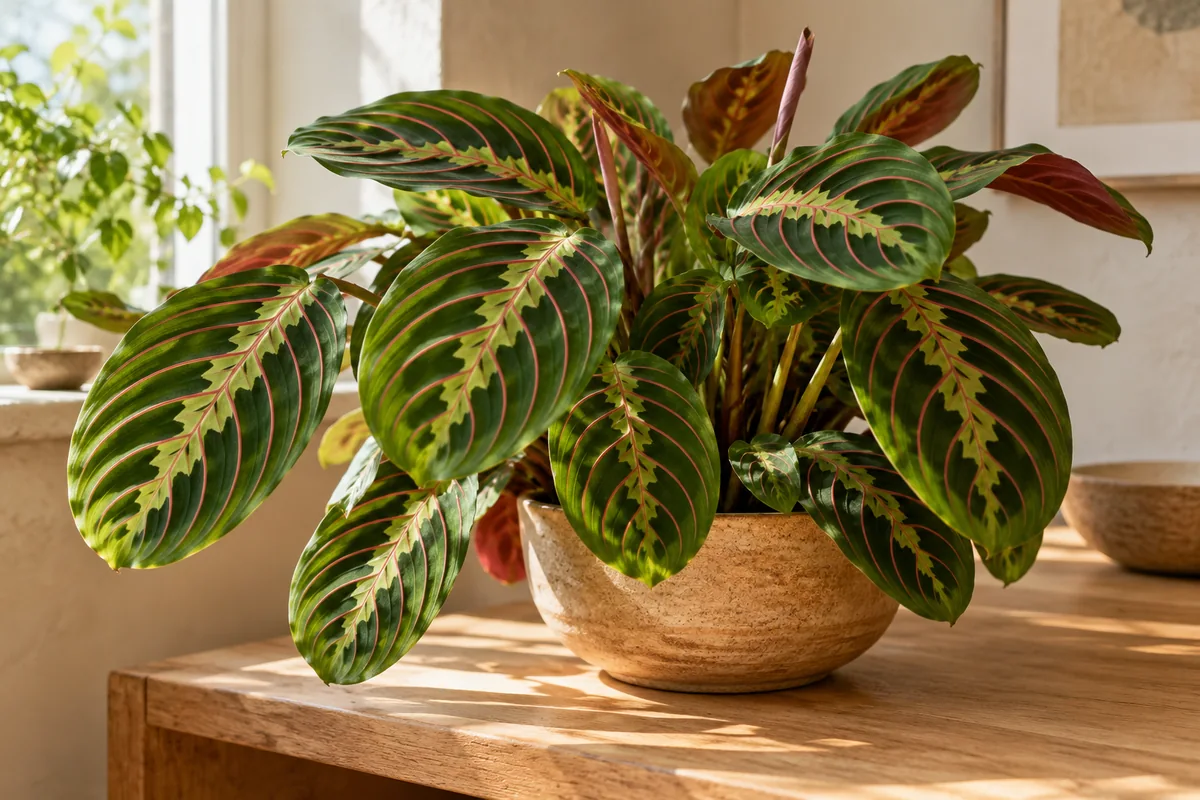
A prayer plant can gradually spread across the surface of its pot until several rooted sections seem to occupy the same space. Division works with those existing sections rather than asking a single leaf to become a new plant. Before lifting the clump, look for separate shoots emerging near the surface and consider whether each prospective piece has its own roots. A small plant with one compact growing center is best left to develop. This method suits Maranta leuconeura, the trailing prayer plant with patterned leaves. Plants sold under the broader prayer plant label can belong to different genera, so check the name before making assumptions about their underground structure.
Choose a time when new leaves are appearing and the room can provide steady warmth. The mix should be slightly moist before division, making fine roots easier to handle without leaving the whole root ball soggy. Prepare small containers with drainage and a fresh airy mix that retains some moisture. A division with only a modest root system does not need a large pot. Set out clean tools and a tray that can catch loose material. Photograph the original plant from above if you want a reference for its structure. Once stems are laid across the table, it becomes harder to remember which growth belonged to each section.
Ease the plant from its pot by supporting the root ball and loosening the container where possible. Avoid pulling on leaf stalks or trailing stems. Brush away only enough loose mix to see how the clump connects. Prayer plant stems may have rooted where they touched the surface, producing sections that can be separated with little disturbance. Trace each proposed division from leaves to roots before cutting anything. An attractive cluster of leaves without a useful root portion is a cutting project, not an established division. Keep the number of pieces modest so every new plant begins with enough foliage and roots to recover without extreme changes in care.
Work along natural gaps between rooted sections, easing them apart with your fingers. Fine roots can intertwine, and some will inevitably be disturbed, but there is no benefit in stripping every strand clean. If a connecting stem must be cut, use a clean sharp blade and make one deliberate cut. Keep each piece supported and out of direct sun while you work. Remove only collapsed material and leave sound roots attached. Trying to make all divisions equal in size often leads to unnecessary cuts. A larger established portion and a smaller viable portion are perfectly reasonable results when that is how the original plant is organized.
Place each section into a prepared pot at approximately its former depth. Spread the roots into the available space gently, then add mix around them without burying leaf stalks deeply. Keep the growing centers near the surface and provide enough support that the plant does not rock. Water the mix to settle it and allow the excess to drain completely. If the pot feels heavy for many days afterward, check that its size and drainage suit the small root system. Do not add decorative gravel simply to make the surface look finished. The exposed mix is useful for monitoring moisture during the first period after division.
Set the pots in bright indirect light with protection from strong drafts and abrupt temperature changes. Some leaves may sit differently for a while after handling. Check the root zone before responding with extra water, since disturbed roots remove moisture slowly. Keep the mix lightly moist without allowing the pots to stand in a filled tray. A temporary loose cover can reduce drying in unusually dry indoor air, but ventilate it and prevent the plastic from resting on leaves. Repeated misting is not a substitute for appropriate root moisture or a suitable room environment. Make one thoughtful adjustment at a time so the response remains easy to interpret.
Fresh rolled leaves emerging from the center of a section are a useful sign of progress. Avoid feeding heavily in an attempt to create those leaves sooner. The divisions first need to establish their roots within the new mix. Leave them undisturbed long enough to observe a pattern of growth and drying. Remove a leaf only when it has finished declining or is clearly damaged, rather than trimming every small brown edge immediately. If a whole section remains limp while the mix is wet, examine the base and drainage. More water is unlikely to solve a problem caused by a persistently saturated root zone.
Once the sections are growing steadily, return them gradually to the positions that suit their light needs. Keep enough room around the leaves for inspection and ordinary airflow. A small division may be ready for a brighter shelf before it is ready for a larger pot, and those decisions should remain separate. Label the plants with the division date and note how many rooted shoots each received. That record makes the next division easier to judge. The most useful result is a manageable plant with intact growing points and a stable root system, even when it produces fewer new pots than the original clump seemed capable of supplying.