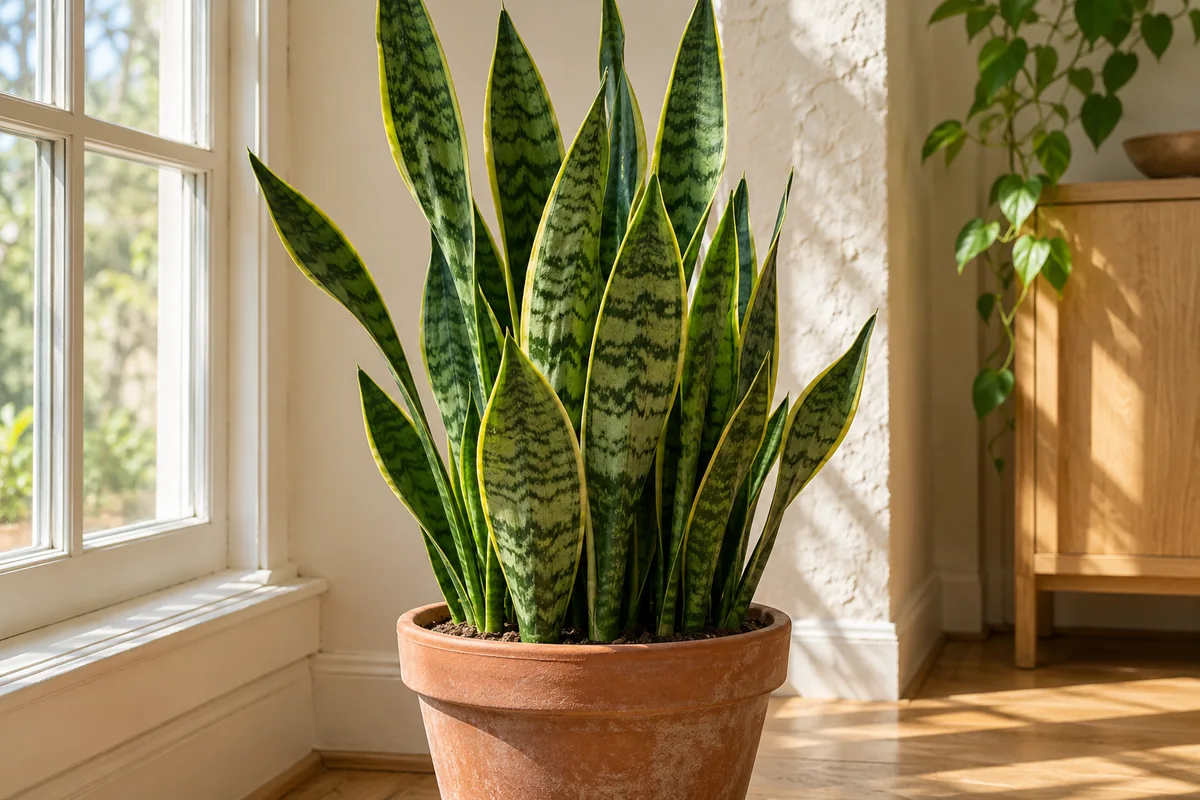
A crowded snake plant often contains several leaf clusters linked beneath the mix by firm rhizomes. Those connections offer a practical way to create new plants when the clump already needs attention. Division preserves a complete growing section with roots, rather than asking a detached leaf piece to develop a new plant from the beginning. It can also preserve the appearance of cultivars whose leaf markings may not remain the same through leaf cuttings. Before separating anything, inspect how the clusters connect. The useful division is a rooted growing section, not an arbitrary wedge chosen to make two containers look equally full on the workbench.
Choose a period of active growth when the operation is optional. Prepare clean pots with drainage, an appropriate free draining medium, and a sharp clean tool capable of cutting the rhizome neatly. Let the plant reach a manageable point in its normal drying cycle so the root ball is not saturated during handling. Wear gloves and keep cut material away from food preparation areas. Tall leaves can bend when the clump is laid sideways, so give them space and support the base. If the old nursery pot is distorted around the rhizomes, loosen or remove the container carefully instead of pulling the entire plant by its foliage.
Ease away enough loose mix to see the connections. Look for leaf clusters with their own firm roots and a suitable piece of rhizome. Some sections may separate with gentle movement, while others need a deliberate cut through the connecting structure. Do not pull until several firm roots tear just because the clump resists. Make clean cuts where necessary and keep the divisions substantial enough to establish. A few useful rooted sections are generally more manageable than many tiny fragments. Leave clusters together if their roots are tightly intertwined and there is no clear benefit to reducing them further. The goal is practical independent plants with functioning structures already attached.
Inspect each section after separation. Preserve firm roots and rhizomes, removing only clearly soft deteriorated material with clean tools. Color alone is not enough to judge roots because the growing medium can stain them and different tissues vary naturally. Fresh cut surfaces need appropriate handling for a succulent type plant. Allow them to settle in a dry airy environment as suited to their size and the room conditions before exposing them to excessive moisture. Avoid leaving the divisions in a wet pile while the pots are prepared. Having the supplies ready beforehand makes this stage easier and reduces unnecessary time with exposed roots on the table.
Choose containers for the roots of each division, not for the size of the original clump. A small rooted section does not need a large planter around it. A modest amount of fresh mix is easier to water predictably, especially while the plant is adjusting. Use the selected free draining medium throughout the root zone and keep drainage openings clear. Set the leaf bases and rhizomes at their previous appropriate depth rather than burying them beneath a new mound. Fill around the roots gently and settle without hard compression. If a tall section leans, use a temporary support or a stable outer cover instead of packing the pot tightly.
Immediate watering depends on the amount of cutting, the starting moisture of the medium, and the growing conditions. Freshly divided fleshy structures should not be left in saturated mix or standing runoff. Follow an approach suited to the species and the actual cuts rather than applying one fixed day count to every division. When watering is appropriate, allow surplus to leave completely and empty the saucer. Check deeper than the surface before watering again. A new pot with fresh mix can remain damp longer than the old crowded container, even when the division looks smaller and seems to need encouragement. Its reduced root volume is a reason for observation, not automatic extra water.
Place the divisions in useful light with a stable suitable temperature. Avoid a sudden move from a shaded position into strong direct sun after root work. A dim corner may slow moisture use substantially, so keep enough light for ordinary growth while protecting the plant from extremes. Leave the roots undisturbed during establishment and inspect the foliage without repeatedly tugging the base. Existing leaves may remain unchanged for some time. A new shoot can appear later once the section has settled. Delay unnecessary feeding, checking any nutrient supply already present in the medium and resuming an appropriate routine when the plants are growing steadily in their new containers.
Manage each division independently as it establishes. One may have more roots, a thicker rhizome, or a brighter position than another, so their watering intervals can differ. Label the pots if it helps you follow the starting condition. Once the plants stand securely and moisture use becomes predictable, remove temporary supports where appropriate and continue ordinary care. Future pot increases should follow genuine crowding rather than the desire to reunite the visual size of the original clump. Division works by preserving complete rooted growth while giving it a proportionate new space. Careful identification of those sections and measured moisture afterward matter more than producing the largest possible number of pieces.