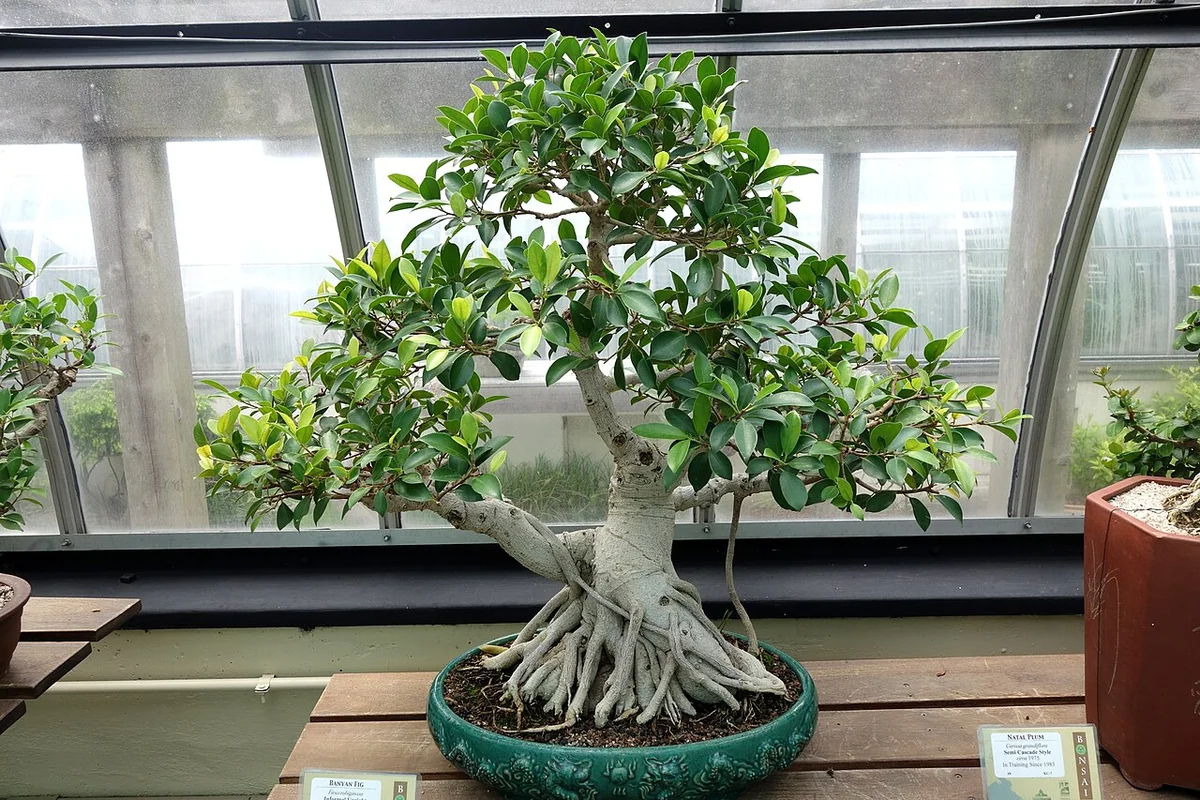
The Australian tree with rusty undersides
Rusty leaf fig is an Australian tree whose name points to one of its most useful identifying characters. Turn a mature leaf of Ficus rubiginosa and the underside often carries a soft rusty covering, particularly on younger growth. The upper surface is comparatively smooth and glossy. In its native eastern Australian range, the species occurs in varied forest and rocky situations and can develop a broad crown and substantial roots. A young container tree offers a much smaller view of that biology. Its appearance can be attractive indoors, but it should be selected for a bright substantial position rather than treated as a standard plant for a dim desk.
The species is also known as Port Jackson fig, linking its common name with the Sydney region. Trees in parks and botanic gardens demonstrate how different the mature scale is from a small pot. That comparison is useful when planning long term care: a container specimen is being managed, not preserved permanently at its nursery size. The texture beneath the leaves is normal and should not be scrubbed off as if it were a fungal coating. Variability exists within the species, including differences in hairiness, so identification should use several features and a reliable label rather than one isolated leaf photograph.
Light and a workable indoor position
Light is the main indoor limitation. A bright conservatory, an enclosed sunroom with suitable temperatures, or a room with large unobstructed windows is more credible than a shaded office corner. A newly acquired tree still needs gradual acclimation before strong direct sun reaches previously protected leaves. Observe the spacing of its new growth and the retention of foliage toward the interior. If the canopy thins while extensions lengthen toward one window, repeated pruning will not solve the underlying light shortage. A plant maintained for a short interior display may require a better growing location between displays; that is different from continuous indoor success.
Water, roots, and a draining container
The pot should be allowed to lose some moisture between complete waterings without becoming a neglected dry block. Check beneath the surface, especially in a heavy cover where the lower root zone may stay damp. Apply water evenly over the root ball and allow it to drain. A tree in stronger light may increase its water use considerably, while the same container after a winter move may remain wet for much longer. Natural occurrence on rocky sites should not be translated into deliberate severe drought for a small newly rooted plant. Root establishment and the current container environment determine what the plant can tolerate.
Use a stable vessel with open drainage and enough volume for the existing roots. A deep practical inner pot can sit inside a decorative cover, provided accumulated water can be removed and the base remains accessible. Repot when the old root system has filled its space and the plant cannot be watered predictably. Increase size incrementally rather than surrounding a small root ball with a very large mass of moisture retaining compost. Keep the stem at its previous depth. Rusty fig can develop strong roots, so check an older container before it becomes difficult to remove without breaking either the pot or the root ball.
Training and ongoing maintenance
Pruning a young tree is a way of choosing its future branch structure. Retain well positioned branches and shorten individual extensions when they begin to exceed the available space. If a particular plant is being trained using specialist miniature tree methods, the root and branch routine needs to follow that discipline; it should not be inferred from a general indoor care page. Ordinary trees can be managed with less intensive intervention. Protect skin from latex and use clean tools. Avoid making a large root reduction and a major canopy reduction on a tree that is already weakened by poor light or waterlogged mix.
Cleaning requires attention to the different leaf surfaces. Wipe dust from the smooth upper blade with a damp cloth while supporting it. Do not rub aggressively at the natural hairs beneath. Examine shoot tips, leaf stalks, and branch junctions for scale or mealybugs, and watch for the fine webbing associated with mites in dry indoor conditions. A broad pale patch that appeared after a move into sun is a different clue from a pest colony. Remove fallen leaves and ensure that a dense crown is not trapping wet debris. Careful observation is more informative than treating every rusty coloured surface as damage.
Nutrient demand indoors is governed by the light available for growth. Use a balanced houseplant feed conservatively during active extension and follow the product instructions. An Australian outdoor tree growing vigorously in open ground is not a useful model for the dose in a shaded pot. Cooler shorter days generally call for less intervention rather than an attempt to maintain rapid summer growth. Protect the tree from hard temperature changes at glass doors and conservatory vents. Before a summer move outdoors, increase exposure gradually and decide in advance how the growing crown will return through the doorway when the protected season resumes.
Meaning without unsupported promises
The tree's genuine cultural setting includes its presence in eastern Australian landscapes, public parks, and collections. That regional connection can be meaningful to someone interested in Australian plants without attaching an invented universal tradition to the species. A giver may choose the contrast between glossy green tops and rusty undersides as a personal symbol of hidden detail or the value of looking closely. That interpretation belongs to the message, not to botanical fact. If discussing Indigenous names or uses, use an appropriate local source and context rather than assuming one account applies across the tree's wide and varied native range.
A gift matched to the recipient
A rusty leaf fig is best offered to an enthusiast who already has a bright protected growing area and understands that it is a potentially substantial tree. It could suit an Australian plant collection, a conservatory opening, or a gift connected with a remembered landscape. It is a poor surprise for someone seeking an undemanding low light office ornament. Keep the sap and chewed foliage away from children and animals, and check regional restrictions before any future outdoor planting. Choose a plant small enough to maintain comfortably, provide its scientific identity, and discuss the available space. Its long term fit matters more than the novelty of the leaf colour.