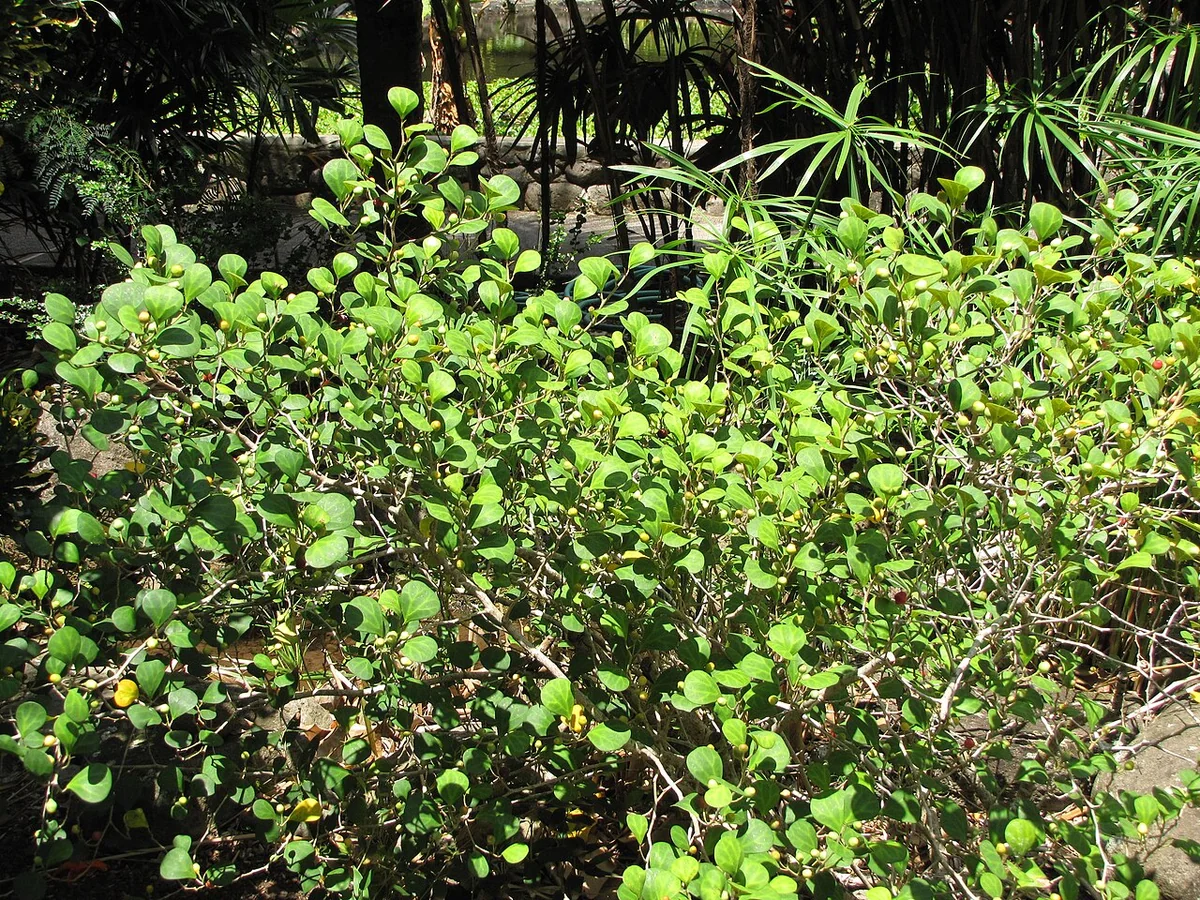
Triangle fig and its botanical synonyms
Triangle fig is immediately recognizable in the houseplant trade through leaves that broaden toward a blunt outer edge. The familiar name Ficus triangularis is a genuine published botanical synonym, which Kew treats under Ficus natalensis subsp. leprieurii. Retaining both names is useful because nursery labels and reference books do not always use the same classification. The plant has an African background and can be grown as a woody shrub or small tree in a suitable protected interior. Its geometry gives it a distinctive character without requiring an enormous leaf. That does not mean that every triangular leaf photograph identifies the same subspecies or horticultural selection.
Choose an accurately labelled specimen, especially when a variegated plant is wanted. Cream margins or pale patches belong to particular selections, while an all green plant has its own appearance and requirements. Leaf proportions can vary, so use the full growth habit and provenance rather than one leaf alone. Look for several sound tips and a firm lower stem above the mix. A tree made from multiple nursery plants may look fuller initially but should be inspected at each base. The eventual canopy can become broader than its compact retail shape suggests, making a little space around a bright window more useful than a tightly fitted decorative niche.
Light and a workable indoor position
Provide bright indirect daylight and introduce stronger direct sun progressively if that is the available exposure. Pale areas on variegated foliage do not replace the photosynthetic work of the green portions, so a dim corner can be especially limiting. At the same time, previously shaded leaves may burn if pressed abruptly into intense hot sun. A curtain can temper a harsh exposure without moving the tree deep into the room. Watch the spacing and condition of new leaves. A loose stem reaching toward a remote window is a clearer sign of the light arrangement than the attractiveness of several older leaves that were formed elsewhere.
Water, roots, and a draining container
Water after checking both the upper mix and the deeper root ball. Let the surface dry somewhat between full irrigations, but do not repeatedly allow the whole pot to become a dry block. Apply water evenly, permit free drainage, and remove the surplus from the outer cover. A small newly purchased plant and a tree recently moved into a larger container may need very different inspection intervals. The amount of green foliage, seasonal light, and room temperature all influence water use. A variegated plant growing slowly in winter shade should not receive the same automatic schedule as a vigorous green plant in brighter summer conditions.
The container should offer a manageable balance between root room and drying behaviour. Repot when roots have occupied the old space or the existing mix no longer wets and drains reliably, using a modest increase in size. Keep the stem at its established level and avoid covering it to hide an uneven base. An airy houseplant medium is more useful than densely packed garden soil. If a larger decorative planter is part of the room, retain a correctly sized inner pot on a stable support and make drainage accessible. The empty area beneath should never become an unseen pool that keeps the lowest roots continuously wet.
Training and ongoing maintenance
Training can emphasize the small tree structure or retain a fuller branching shrub. Shorten selected shoots above living nodes while preserving adequate foliage on the remaining framework. A weak plant under insufficient light should not be cut hard in the expectation that it must rebuild a perfect canopy. Establish it first and make structural changes in stages. Gloves are appropriate when pruning because fig latex can irritate skin and mark surfaces. Keep clippings away from children and animals. If a grafted or grouped retail plant has unusual stems, inspect nursery ties and labels before they press into growing bark, rather than preserving every part of the original presentation indefinitely.
Wipe dust gently from the leaf blades and inspect their undersides, petioles, and stem junctions. Scale, mealybugs, and mites are easier to address when observed early. A fixed pale marking on a variegated leaf differs from a new colony or a spreading damaged area, so compare changes with the original foliage pattern. Keep the pot outside the direct blast of a heater and away from cold air at a winter door. Feed lightly during genuine active growth, using the product's indoor instructions and accounting for any fertilizer in fresh compost. Do not treat all yellowing as a request for nutrients without inspecting the roots.
Small figs may appear under suitable conditions, but fruit is not necessary to demonstrate successful indoor care. An ornamental fig should not be treated as an interchangeable source of edible fruit simply because another member of the genus is a familiar food plant. Remove fallen material from the mix and prevent casual tasting. If leaves begin to drop, reconstruct the sequence of watering, exposure, and temperature changes before acting. A recently moved tree can shed some foliage while adjusting, whereas a soft base or repeatedly wet root ball calls for a different investigation. Several simultaneous drastic interventions make that distinction harder rather than clearer.
Meaning without unsupported promises
The triangular outline offers a contemporary design interpretation of balance, structure, or a meeting of ideas. Such a meaning can be chosen personally for a gift, but it is not a universal tradition established by the species name. Likewise, the cultural history of other African figs should not be transferred automatically to this subspecies without an appropriate source. Its genuine naming story is interesting enough: a familiar horticultural label connects with a broader botanical classification. A recipient who enjoys geometry or taxonomy may appreciate that contrast. The plant does not need a promise of prosperity, protection, or healing to have a thoughtful place in a home.
A gift matched to the recipient
Triangle fig can suit a housewarming, a new design workspace, or a requested addition to a collection of distinctive foliage trees. Confirm whether the intended window can support a variegated selection and whether the owner wants a fuller shrub or a clearer trunk. A compact healthy plant is often easier to integrate than a large specimen selected only for dramatic markings. Consider pets and children that may chew fallen foliage or contact pruning sap. Include both botanical names, any selection name, and the present care conditions. A correctly identified tree matched to the recipient's space gives the chosen symbolism a practical future instead of leaving it as a decorative claim.