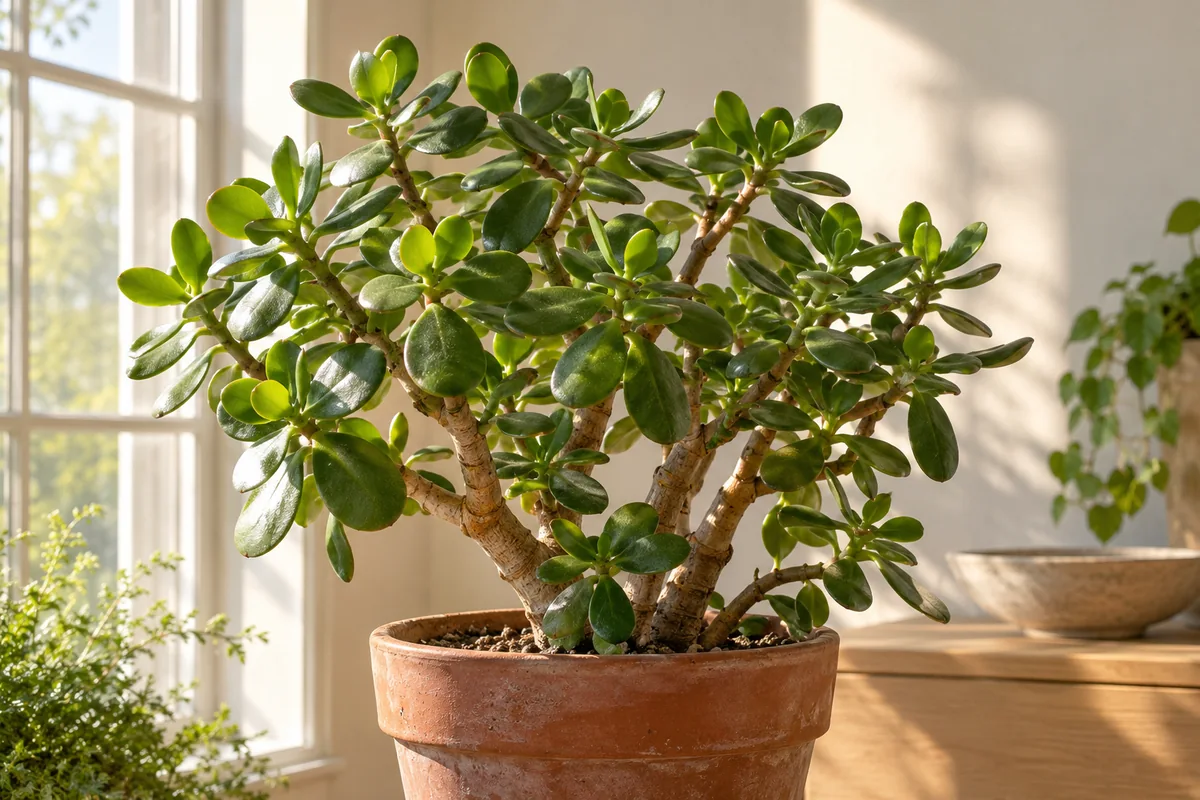
A jade branch that has become awkwardly long can provide a useful cutting when the parent is being shaped during active growth. The firm leaves and stem hold moisture, so the cutting does not need to be treated like a soft leafy shoot that must immediately sit in wet medium. Begin with a sound piece of growth and a clear plan for the cut surface. Letting that surface dry appropriately before planting is an important part of the process. A small prepared cutting is easier to support than a heavy branch, and its first container should fit the roots it will develop rather than the size of the future plant.
Choose a firm stem section with several suitable leaves and no unexplained soft areas. Use clean sharp pruners and support the branch so the final cut is neat rather than torn by its own weight. If the cutting has a crowded lower section, remove leaves that would otherwise be buried, keeping the remaining foliage intact. Handle the stem gently because fleshy leaves can detach under pressure. Keep cut plant material away from food preparation surfaces and clean the work area afterward. The parent should retain a useful shape with enough foliage to continue growing. There is no need to take a large branch when a smaller balanced cutting can serve the same purpose.
Place the prepared cutting in a dry sheltered position with suitable ventilation and indirect light while the cut surface dries. The time needed depends on the thickness of the stem and the room conditions, so inspect the surface rather than treating one fixed interval as universal. A large fresh cut differs from a thin tip. Keep the cutting out of intense direct sun and away from a damp tray during this stage. Do not seal it in a wet bag in an attempt to preserve every trace of moisture. Its stored reserves allow a different approach from many soft foliage cuttings, and the exposed surface benefits from being allowed to settle before planting.
Prepare a small drained pot and a suitable free draining succulent medium. The texture should allow air around the base while providing eventual contact with moisture for new roots. A very large pot holds more material than the unrooted cutting can use and makes the early watering decisions harder. Avoid a stone layer beneath dense mix as a supposed drainage correction. Use an appropriate blend throughout the root zone. Make an opening before placing the cutting so its settled cut surface is not scraped forcefully through compacted material. Insert only enough of the prepared bare stem to support the cutting appropriately, keeping leaves above the surface.
Settle the medium gently and use a temporary support if the cutting is top heavy. Do not bury extra stem or pack the pot hard simply to make it stand upright. A clean small stake or an external brace can reduce movement while roots form. Keep the container in useful bright filtered light initially, avoiding an abrupt exposure to strong sun. The cutting needs a stable place where it will not be knocked repeatedly. Root formation can take time, and the absence of immediate new leaves is not a reason to keep lifting it out. Repeated inspection beneath the surface can damage the early roots and reset the contact you are trying to establish.
Manage moisture conservatively according to the medium, room, and stage of rooting. A fresh jade cutting should not remain in a saturated pot or a saucer of water. The stored moisture in its tissues does not mean it can be ignored indefinitely, but it does mean that daily soaking is inappropriate. Check the medium and the firmness of the cutting without squeezing the leaves repeatedly. If water is added, let excess leave completely and allow an appropriate drying interval. Avoid applying concentrated fertilizer to an unrooted base. Nutrients are not a substitute for the gradual development of roots that can absorb and use water in the first place.
Look for gradual signs of establishment, such as sustained firm growth and eventually new leaves. A slight resistance to gentle movement may develop, yet do not pull upward to test it repeatedly. A leaf can lose some fullness while the cutting uses reserves, so consider the whole stem rather than one older blade. Soft deteriorating tissue deserves inspection and a review of moisture conditions. Once roots are functioning and growth is steady, watering can approach the ordinary routine for a young jade in its actual mix. Keep the light appropriate and adjust stronger sun gradually rather than making several large changes the moment a new leaf appears.
Let the new plant fill its first small container before moving it again. A compact rooted cutting is easier to water predictably than a tiny plant in a broad decorative bowl. As the stem develops, support can be reduced if it stands securely, and shaping can wait until the plant has enough growth to justify it. Keep notes about the starting stem size and the mix if you want to repeat the process. The useful sequence is a firm cutting, an appropriately settled cut surface, a drained small root zone, and measured moisture. Each step follows the structure of the plant rather than a demand for immediate growth above the rim.