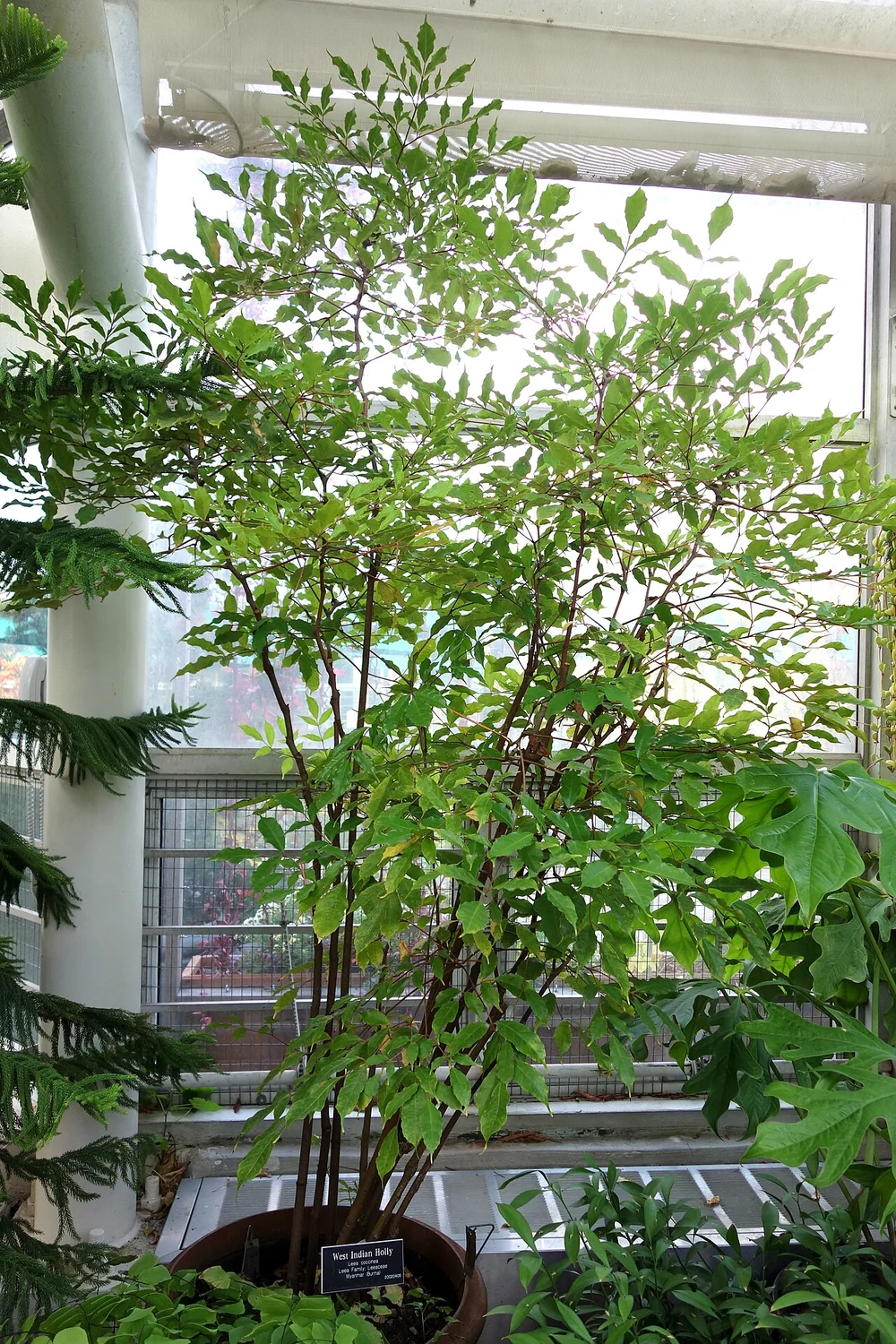
A tropical foliage shrub under more than one name
Red leea offers an alternative to the familiar silhouettes of palms and ficus trees. Leea coccinea is a horticultural name still encountered in collections, while the National Tropical Botanical Garden lists it as a synonym of Leea guineensis. Keeping that connection on the label makes later research more reliable. The plant is a tropical woody shrub or small tree with large compound leaves, not a compact temperate tree that needs a cold winter. A protected warm conservatory can accommodate a young specimen. An ordinary office with weak light and uncontrolled winter temperatures should not be described as an equivalent growing environment.
The broader botanical distribution recorded for Leea guineensis extends through tropical Africa and parts of tropical Asia, including Madagascar and areas of South and Southeast Asia. The plant belongs to the grape family, although the familiar genus name Leea has historically appeared in a family of its own in older references. Its foliage is divided into toothed leaflets on a branching leaf structure, giving a larger visual texture than a myrtle or citrus. Reddish new growth and ornamental selections with stronger dark colour account for much of the interest. Do not assume that every seedling will keep the uniformly burgundy appearance of a particular named form.
A large leaf needs useful protected light
Place the tree where its full crown receives bright light. A warm conservatory, a suitably lit growing room or a generous bright window can be considered, depending on the specimen's size. Tropical origin is not an instruction to keep it in a dark corner. Equally, a leaf developed under filtered nursery conditions should not be moved abruptly into intense hot sun behind glass. Increase exposure gradually and examine new growth as well as older leaves. The actual response of the plant matters more than describing the room as east facing or west facing without considering curtains, neighbouring buildings and the seasonal path of the sun.
Maintain warmth and avoid cold draughts around the root ball. A tropical tree can be damaged by winter transport or by nights against cold glazing even when daytime room temperatures seem acceptable. A building that switches its heating down sharply outside office hours may offer an unsuitable environment. Keep the broad foliage out of direct heater airflow and allow enough room for air movement without constant buffeting. If humidity needs improvement, manage it for the room as well as the specimen. Repeatedly soaking the leaves does not correct cold roots or provide the stable conditions missing from an unsuitable position.
A fertile mix must also let water leave
Use a fertile container medium with a balance of moisture retention and drainage. Singapore's National Parks profile describes the plant as suited to fertile loamy soil with moderate watering and good drainage. Translate that into a pot by checking the actual rooted material rather than maintaining a permanently wet decorative surface. Water thoroughly when needed, then drain the container completely. A large leafy canopy can draw down moisture quickly in suitable warmth and light. The same plant can use much less in a darker cooler period, even though its broad leaves still make it look as if it must be thirsty.
Keep the planting depth consistent and increase container size in proportion to the roots. A young tree in an oversized tub can have a damp outer zone that remains unused while the original root ball behaves differently. Inspect both when watering is difficult to interpret. Stabilise a leaning trunk with appropriate support rather than burying it deeper in heavy medium. The weight of broad foliage also makes pot stability important near doors and walkways. A tall specimen should not depend on the decorative outer pot alone to prevent tipping, especially if people routinely move furniture or reach past the branches.
Shape a plant that naturally occupies space
Leea can become considerably larger than the small nursery specimens suggest. Assess the mature container form the room can support before using pruning as the sole plan for indefinite restraint. Selective removal of unsuitable growth can create a readable framework while retaining the compound foliage that makes the plant distinctive. A plant grown mainly as a dense shrub and one trained to reveal a trunk are different design choices. Neither should be achieved by abruptly removing most of the living crown. Make larger changes in stages during suitable growing conditions, and allow the plant to respond before another substantial intervention.
Use a suitable container fertilizer at its directed rate during active growth and account for any feed already included in the medium. Red or bronze new leaves are not automatically signs of starvation, and greener mature leaves may be normal for the plant being grown. Compare the specimen with its cultivar information rather than chasing a colour seen in an unrelated photograph. Flushes also change water use, so note when leaves expand and harden. A simple written record helps separate normal development from a decline caused by weak light, root stress or an abrupt change in the room's temperature.
Flowers and fruit are botanical details
Leea guineensis can produce clusters of small coloured flowers and later berries, but an indoor specimen may be cultivated entirely for its foliage. These structures should be treated as ornamental botanical features rather than a crop. Membership of the grape family is not evidence that its berries are table grapes or suitable for tasting. Remove fallen fruit where exploratory children or animals could reach it. Inspect leaflet undersides and sheltered stems for pests, particularly before placing a new arrival close to other plants. A large compound leaf can conceal small infestations on its inner surfaces even when the outer canopy looks impressive from across the room.
The plant can suit a gift for an experienced tropical foliage grower who wants a different texture or enjoys a burgundy and green colour scheme. Its personal design meaning may be warmth, contrast or curiosity about less familiar woody plants. Those are interpretations rather than established cultural promises associated with the species. Confirm the recipient's space and winter conditions before choosing it. A conspicuous red young canopy may sell the plant, but the gift includes the future width, regular watering and need for warm bright shelter. Someone seeking a nearly independent office tree is unlikely to appreciate those demands simply because the foliage initially looks dramatic.
Preserve the identity of the particular specimen
Pass on both Leea coccinea and Leea guineensis as relevant names, together with a verified cultivar label if available. Do not invent a cultivar from leaf colour alone. Include the nursery source and recent care history so the new grower can recognise a normal flush and adjust the watering sensibly. Choose a container that supports the tree while allowing runoff to be removed and roots to be inspected. A successful first season establishes stable foliage and usable room for the crown. The plant is interesting enough on those terms without inflated promises about flowers, permanent dark coloration or suitability for every indoor setting.