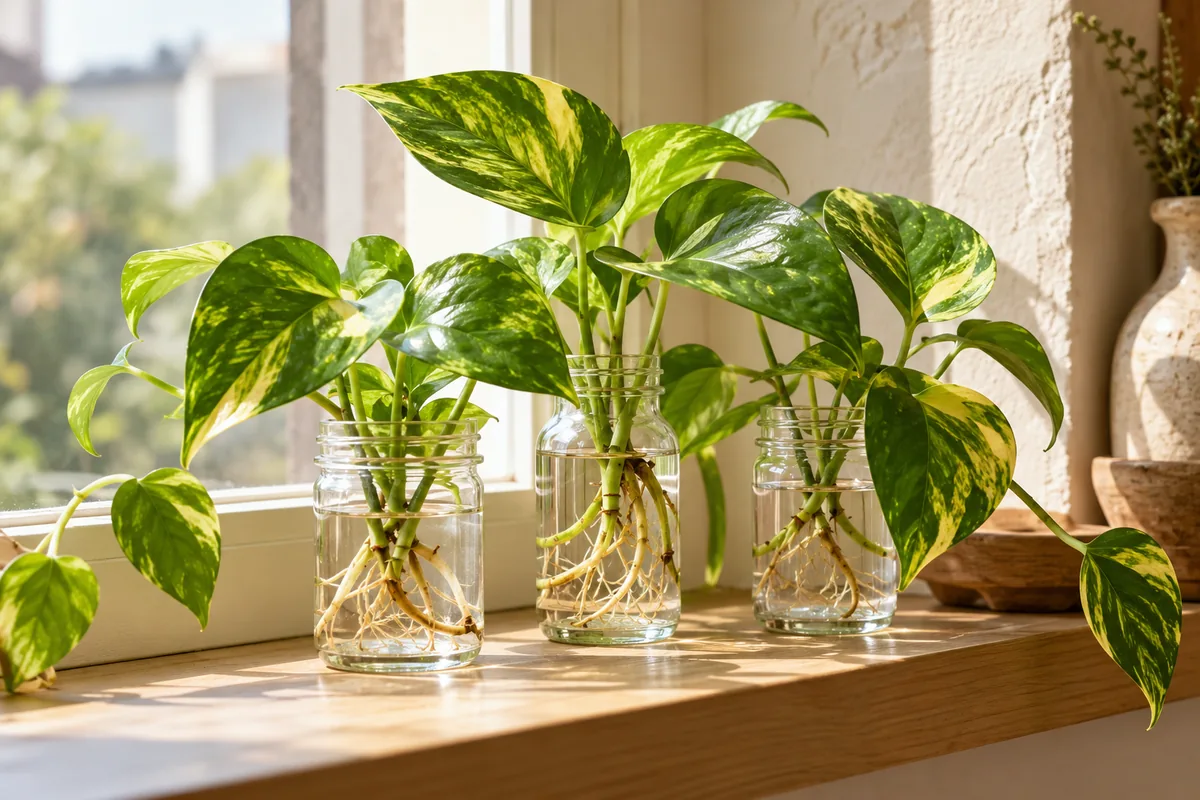
A fresh cutting has leaves that continue losing moisture and little or no root system to replace it. That makes water important, yet a constantly soaked pot is not the answer. The rooting medium also needs air, and the balance changes as roots form. Start by identifying the plant and the propagation method. A soft leafy philodendron cutting, a callused jade stem, and a fern division have different starting needs. This guide focuses on leafy stem cuttings in a suitable medium. The most useful habit is to examine the setup itself before adding water, rather than treating every drooping leaf or dry looking surface as the same problem.
Choose a container small enough for the cutting and deep enough to hold it securely. Drainage holes allow excess water to leave, but they cannot make a dense compacted mix airy by themselves. Use a rooting medium with particles that retain some moisture while leaving spaces between them. Fine perlite, suitable fresh potting material, and other appropriate components can be combined according to the plant. Moisten the medium before inserting the stem so you know its starting condition. A large dry pocket around the node is unhelpful, and a heavy saturated container makes the next moisture decision difficult. The initial preparation sets the pattern for the days that follow.
Insert the cutting so the intended rooting points contact the medium and leaves remain clear of the surface. Support the stem if it moves whenever you touch the pot. Repeated movement can disturb the earliest roots. Water gently to settle the mix if needed, then let the container drain and empty the saucer. Do not leave a small pot sitting in collected water simply to avoid checking it later. The lower portion can remain saturated even when the top appears less wet. Lift the pot once it has drained and remember its weight. That simple comparison gives you another observation to use alongside the appearance and feel of the surface.
Leaf moisture loss can be reduced by giving the cutting gentle indirect light and shelter from hot moving air. A loose clear cover is useful for some leafy species, especially in a dry room. Keep it away from direct sun, leave space above the leaves, and open it regularly to inspect the plant and exchange air. Heavy dripping condensation is not a measure of successful propagation. A covered pot often dries more slowly than an uncovered one, so the same watering habit should not be applied to both. Succulent cuttings that need their wounds to dry are a different situation and should not be placed into a sealed humid setup without checking the method.
Check moisture with several clues rather than one. Look at the color of the medium, feel a small exposed area, compare pot weight, and note whether the base of the container still feels damp. A dry surface can sit above a wet center, particularly in a deep pot or a cool room. Add water when the medium is approaching the slightly moist condition appropriate for the cutting, not because a certain day has arrived. Apply it gently and allow the excess to drain. If the container seems to need water constantly, review its position, the room airflow, and the suitability of the mix before increasing the number of daily interventions.
A wilted cutting deserves inspection before a response. Firm stems in drying mix may need water or reduced moisture loss from their leaves. Soft dark stems in wet material need a different investigation. More water can prolong the conditions that caused the collapse. Remove fallen leaves from the surface and keep neighboring cuttings from pressing tightly together. If one piece fails in a shared pot, remove it carefully and inspect the others without automatically discarding everything. Avoid feeding unrooted pieces to make them recover faster. Their immediate limitation is often the ability to maintain a functioning stem and form roots, not a shortage of fertilizer in the surrounding medium.
As roots develop, the cutting begins using water differently. New growth, improved stability, or roots visible at drainage holes can indicate that establishment is underway. Gradually increase ventilation if a cover has been used, watching the leaves during the change. A sudden move from a humid enclosure to a hot dry room can cause avoidable wilting even after roots have formed. Continue checking moisture rather than imposing the full routine used for a large mature plant. The small root system still occupies a limited area. If you repot later, make only a modest increase in container size so the new volume remains manageable as growth continues.
Keep brief notes on the container, medium, room position, and time between actual moisture checks. Those details help explain why one batch rooted easily and another stayed wet too long. A photograph of the medium after drainage and again before watering can also improve your judgment. There is no need to chase a perfectly identical result every time. Plants and rooms change, and a useful routine adapts to those observations. The aim is steady access to moisture with enough air around the developing roots, achieved through a suitable setup and attentive checks. Once that pattern becomes familiar, propagation usually requires fewer corrective moves and less unnecessary watering.