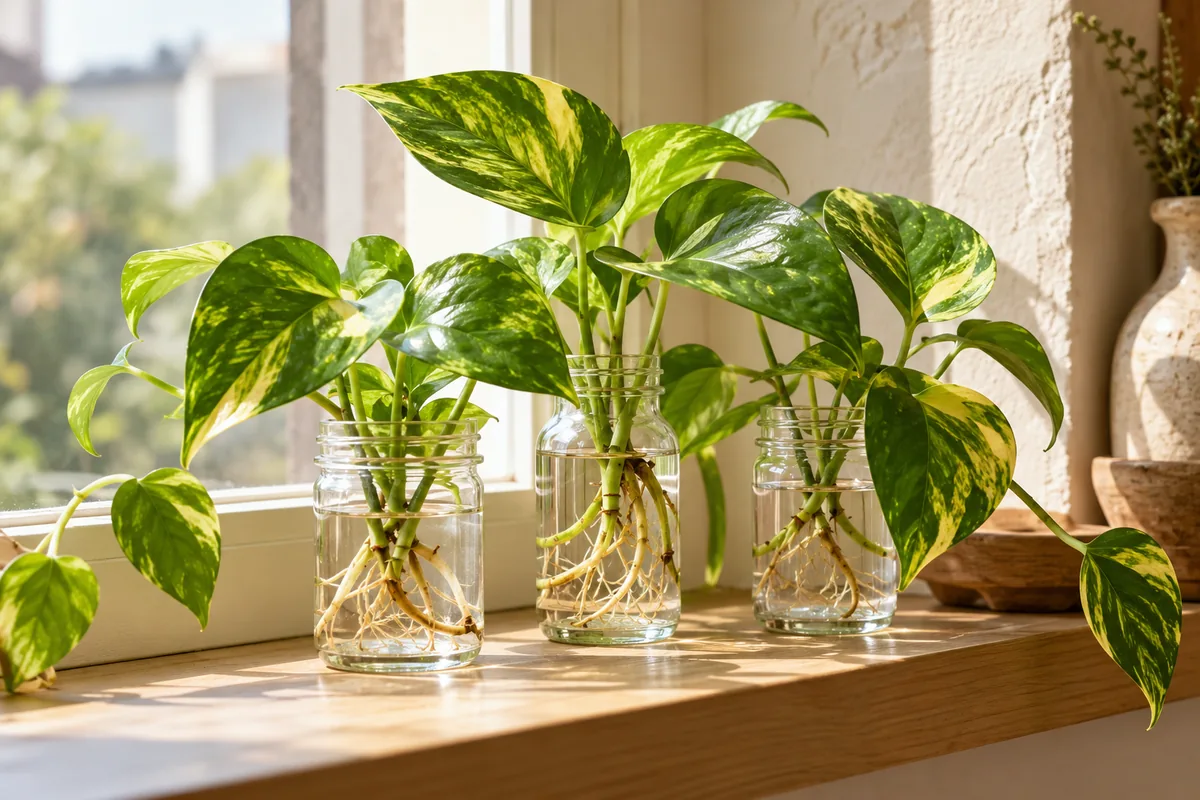
A jar full of roots can make a cutting seem ready for anything, yet the move into potting mix is a genuine change in its growing environment. The roots will meet air spaces, particles, and a moisture pattern that rises and falls instead of remaining continuously surrounded by water. A gentle transfer gives the plant a better opportunity to adapt. Common trailing vines such as pothos and heartleaf philodendron are useful examples, though different plants respond at different speeds. Look for a viable stem and several firm roots rather than waiting for an enormous tangle. A modest root system is easier to arrange without bending or breaking it.
Choose a small pot with drainage holes before taking the cutting from its vessel. The container should hold the roots comfortably with a little space for fresh mix around them. A large pot adds wet material the young roots cannot yet use. Prepare an airy mix suited to the species, moisten it evenly, and allow excess water to drain. Dry dusty material can be difficult to wet after the roots are placed inside. Check the mix ingredients as well as the label, since very coarse pieces may leave gaps around delicate roots. A small scoop and a clean stick make it easier to position material without repeatedly lifting the cutting back out.
Remove the cutting by supporting its stem and guiding the roots through the opening. If the jar has a narrow neck and the roots are tangled, work slowly rather than pulling harder. A vessel chosen for easy access prevents this problem in future attempts. Examine the roots while they are visible. Firm roots can vary in color depending on the plant and water, so do not judge them by color alone. Remove clearly collapsed material only when necessary. Keep the roots from drying during the inspection. Several cuttings can share a pot if they fit sensibly, but do not compress them into a dense knot simply to create an instantly full appearance.
Make a generous opening in the prepared mix and lower the roots into it in a natural arrangement. Add material around them gradually while holding the stem at the desired depth. Keep leaves and their stalks above the surface, and position the lowest useful node according to the plant rather than burying a long stretch of stem. Tap the pot lightly to settle the mix. Avoid pressing hard enough to crush roots or remove the air spaces. If the cutting needs support, use a simple loose stake. A stable stem experiences less movement as new roots spread, and support is preferable to planting the piece unnecessarily deep for mechanical balance.
Water slowly after planting so the mix settles around the roots and any remaining dry pockets become evenly moist. Let the pot drain completely and empty the saucer. The first watering is not a reason to keep the container sitting in a reservoir unless it is part of a specifically designed system you understand. Place the plant in bright indirect light with steady warmth. Avoid moving it straight from a shaded jar into a hot sunny window. The leaves now depend on roots that are adapting to a different environment. Stable conditions reduce the number of demands placed on the plant during this transition and make its response easier to read.
Check moisture regularly during the early period, allowing the surface to lose some wetness without letting the entire root zone dry abruptly. There is no universal number of days between waterings. Pot size, mix, room temperature, light, and the cutting itself all influence the pace. A slightly drooping leaf does not automatically mean the pot needs more water. Feel the mix and compare pot weight before responding. If it is still wet, inspect drainage and avoid adding another dose simply because the roots came from water. The new setup should contain both moisture and air. Recreating a jar inside a pot defeats the purpose of the transfer.
New growth may pause while the plant adjusts. Existing roots can change their branching pattern as new roots develop within the mix. Avoid unpotting every few days to check that process. Look instead for firm stems, reasonably stable leaves, and eventually a fresh shoot or leaf. Remove any leaf that falls onto the moist surface. Feeding is usually unnecessary immediately after transfer, particularly when the fresh mix already contains nutrients. Wait for establishment before beginning a suitable feeding routine. If the stem base becomes soft or the pot remains wet for a long period, address those conditions directly rather than treating the delay as a lack of fertilizer.
As fresh growth becomes consistent, gradually move toward the ordinary moisture pattern appropriate for the species. A pothos, a fleshy peperomia, and a hoya will not all use the same routine. Keep the plant in its small container until the roots make use of the available space, and judge repotting separately from the appearance of the first leaf. Record the transfer date, the size of the roots, and the mix used. Those details help explain why one cutting settled quickly and another needed more attention. The goal is a plant growing independently in a manageable pot, with care based on its present roots rather than its earlier life in water.