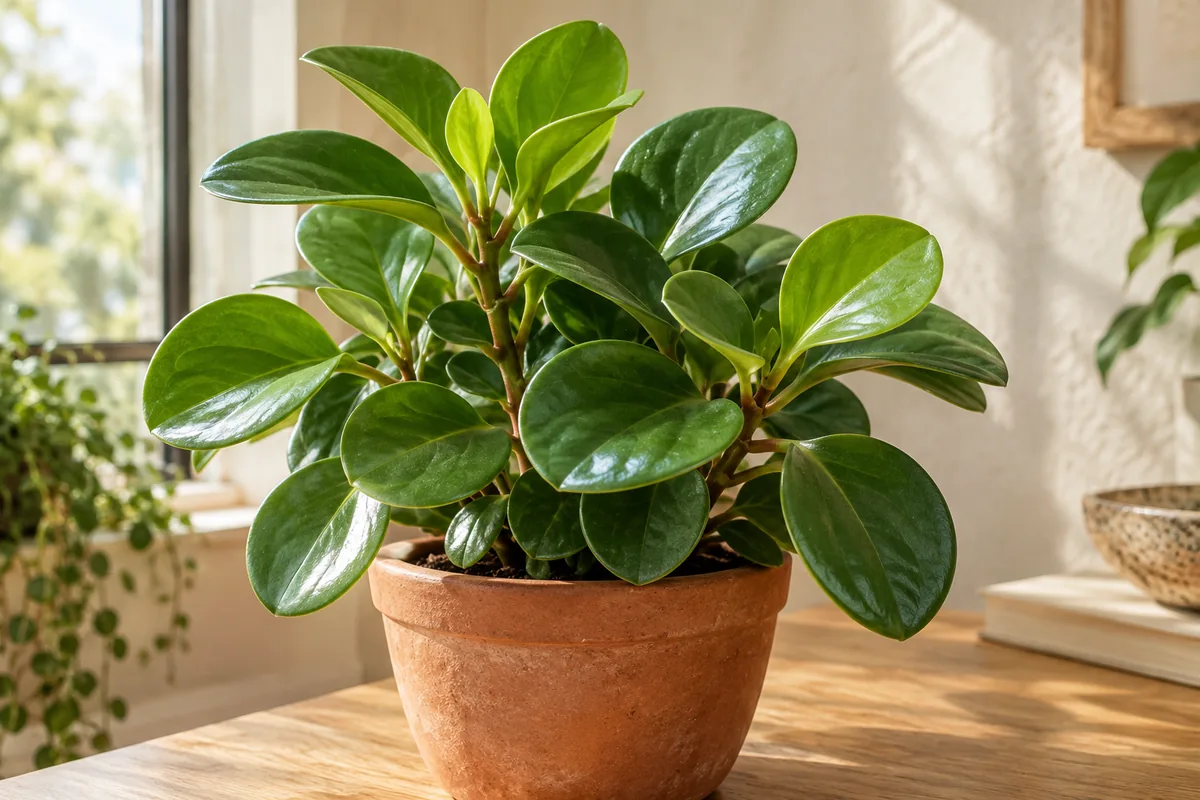
A peperomia that has grown a few leaning stems can provide useful cuttings without needing a dramatic haircut. The firm, fleshy stems of Peperomia obtusifolia are particularly manageable because their nodes are easy to see and the leaves hold some stored water. Start with a compact section rather than a tall piece carrying a large canopy. The goal is a cutting that can remain steady while it forms roots and then make new shoots from its nodes. Different peperomia species vary in leaf structure and preferred propagation methods, so confirm the name of your plant before treating every peperomia in the collection the same way.
Choose a stem that is firm from base to tip and free from dark soft patches. Look for two or three nodes along a short section, then make a clean cut below the lowest one you intend to retain. Remove the lower leaves only where they would sit in the growing medium or water. A small upper set of leaves is sufficient. If the stem carries a long flower spike, removing that spike can make the piece easier to handle. Keep cuttings from differently patterned plants labeled. Stem propagation is generally a more predictable choice than leaf propagation when preserving the appearance of a particular variegated plant is important.
Have the container ready before preparing a group of cuttings. A little nursery pot with drainage holes is easier to manage than a deep decorative vessel. Use a light mixture that holds a little moisture between particles without collapsing into mud. Fine perlite combined with a suitable fresh potting material is one workable option. Moisten the mixture first and let the excess water escape. Make a hole with a clean stick so the cut stem is not scraped as you insert it. Set the lowest node close to or just within the surface and firm the surrounding mix gently enough to hold the stem upright.
Peperomia cuttings can also root in clean water when the lower node remains submerged and every leaf stays above the waterline. A small jar makes root development easy to observe. Replace cloudy water promptly and wash the container when residue builds up. A jar should never become a substitute for checking the base of the stem. Fleshy tissues can soften if conditions deteriorate, and a cutting may still have firm upper leaves after the submerged part has begun to collapse. If you choose the water method, plan the transfer to a pot before the roots become an enormous tangled mass that is difficult to place without damage.
Give the cutting bright indirect light and a position with steady indoor warmth. Direct midday sun can heat a propagation cover or jar rapidly and may mark tender leaves. A loose clear cover over a potted cutting can reduce drying in a very dry room, but leave room for the leaves and exchange the air regularly. Heavy condensation is not a target. The medium should remain lightly moist, with its surface allowed to lose some wetness before you add more water. Avoid daily watering by habit. A stem with no established roots removes little moisture, especially when the cutting is small and the room receives limited light.
Observe the plant without pulling it up. A cutting may remain still for several weeks while roots begin beneath the surface. New growth at a node and a gradual increase in stability are useful signs. In water, look for several firm roots and the beginning of branching. Do not confuse a callused cut end with a working root system. If a lower leaf yellows, inspect the stem and moisture before making changes. Remove fallen leaves from the surface so they do not stay pressed into the damp mix. A section that becomes translucent or soft should be taken out and examined rather than supported with extra fertilizer.
When a water rooted cutting has enough roots to anchor it, place it in a small pot of airy mix. Spread the roots gently into a prepared hole and avoid forcing them straight down into a compressed clump. Keep the stem at a sensible depth, with leaves clear of the surface, then water through and drain. During the transition, check the mix frequently enough that it does not become entirely dry around the new roots. A cutting rooted directly in a medium can remain in that container longer, provided it has room and the mix still drains. Repeated moving slows the practical progress you are trying to encourage.
Let established new growth guide the return to ordinary care. A young peperomia should gradually experience the slight drying between waterings appropriate for its fleshy tissues, while avoiding the extreme dryness a tiny root system cannot yet manage. Begin feeding only after the plant is established and follow the label for the product you use. Pinching later growth can encourage a fuller shape once several leaves have developed. Keep a record of which stem section you used and how it rooted. Over time you will learn whether your room favors water propagation or direct rooting, and how small a container keeps the process easiest to manage.