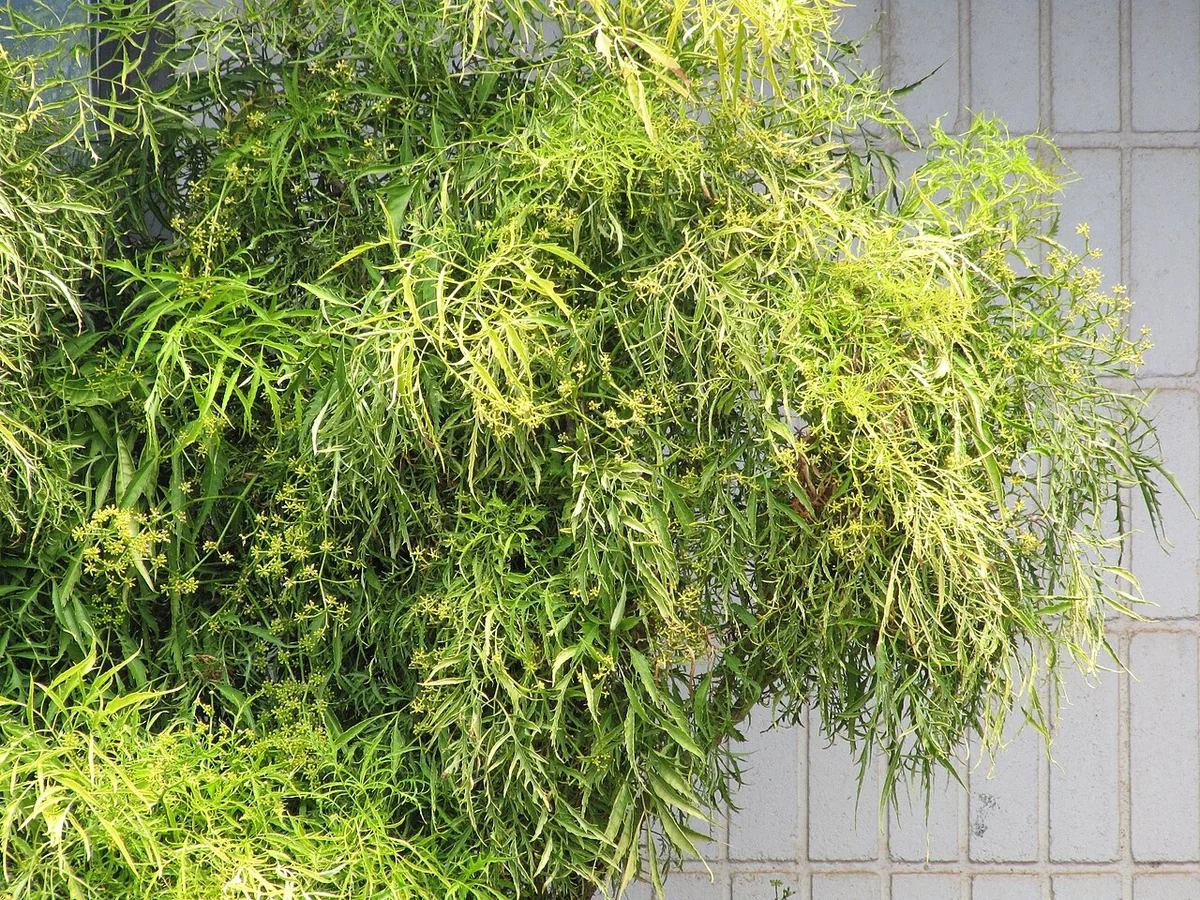
Fernlike foliage on a woody plant
Fern leaf aralia is a woody plant that borrows the visual delicacy of a fern without being one. The name Polyscias filicifolia remains common in horticulture, while some current taxonomic sources place it under Polyscias cumingiana. Its deeply divided foliage and changing leaf forms make that naming information particularly useful in a collection. The plant has a tropical Pacific and Malesian background and has been cultivated widely as an ornamental shrub. Indoors it can develop an upright branching framework rather than a carpet of fronds. A correct label should accompany it, because treating it as a true fern would obscure both its growth habit and its propagation needs.
Young foliage can be finer and more dissected than later growth, so a change in leaf shape is not automatically a problem. Examine the new shoot as a whole and compare it with a reliable description before assuming that a different plant has appeared. A nursery specimen should have firm stems, intact growing tips, and a base that can be inspected above the mix. Fine leaflets can hide dead material or a pest colony, making a close check more valuable than a distant impression of fullness. A modest plant with a balanced framework is often easier to establish than an oversized specimen whose interior has already become bare.
Light and a workable indoor position
Choose an indoor position with bright filtered daylight and consistent warmth. Its fernlike texture may look natural in a shaded room, yet that decorative association does not prove that the tree can grow in deep interior darkness. A window with a generous sky view provides a better starting point than a bookshelf behind several layers of plants. Introduce direct sun only gradually if the material was grown under shade. Watch how closely the newest leaflets are arranged and whether lower growth persists. Long thin extension toward one bright point is a reason to reassess exposure before using fertilizer or repeated pruning to force a denser shape.
Water, roots, and a draining container
Root moisture should remain within a moderate range. Feel beneath the top layer before watering, then irrigate evenly through the ball when it needs replenishment. Allow drainage and remove excess water from any outer cover. Fine foliage can be damaged by a missed drying interval, but keeping the mix permanently saturated creates a different root problem. A small young plant may need more frequent inspection than a large established tree. If several stems share one pot, check that a declining stem is not being overlooked among healthier neighbours. Their combined canopy can conceal unequal roots and local decay at the base.
The relationship between air and roots becomes more important after repotting. Use a mix that retains moisture without collapsing, and move up only as far as the existing root system requires. Do not add a large quantity of dense compost merely because the canopy appears tall. Keep the original stem depth and support the root ball while lifting it from its old container. Avoid stripping away all of its healthy fine roots to create a clean display. If the tree is slow to resume growth, review light and temperature before disturbing it again. A stable period usually yields more useful information than a series of corrective repots.
Training and ongoing maintenance
Warm humid conditions are helpful, but the foliage also needs air movement that is gentle rather than chilling. Place the tree outside the direct route of heating and cooling vents. A properly managed humidifier can alter an excessively dry room, while frequent fine spraying mostly wets the leaves for a short period. Do not seal the crown into a damp stagnant corner. Dust can be removed by carefully rinsing a manageable specimen or wiping accessible foliage without snagging the fine divisions. Let surplus water drain from the pot afterward. The cleaning process should reveal the plant's condition, not create another period of excessive root wetness.
Pruning can expose a pleasing arrangement of trunks and branches, but it should follow the living structure. Shorten a vigorous extension to a useful node and preserve enough foliage on the rest of the tree. Cutting every stem to the same length often removes the fine layered appearance that makes this aralia attractive. Wait for an established plant to show active growth before undertaking a large reduction. Suitable stem material may be propagated under controlled conditions, whereas an isolated decorative leaflet is not equivalent to a stem cutting. Keep propagated plants labelled with both the horticultural name and any taxonomic synonym used by the source.
Inspect for small insects and mites before a problem becomes a conspicuous loss of leaflets. Mealybugs can occupy protected joints, scale can resemble fixed bumps, and mite damage may first appear as pale stippling. Identify what is actually present before selecting a treatment. A separate pattern of yellowing above wet mix should prompt a root and drainage check. Feed moderately while the tree is extending under suitable light, using the chosen product's indoor instructions. A slow winter plant does not need an aggressive attempt to reproduce tropical outdoor growth. Record changes in location or temperature so a delayed leaf response has a context.
Meaning without unsupported promises
The fine foliage can be a personal symbol of detail, craft, or the many small decisions that build a larger form. That interpretation is appropriate for a gift when it is presented as the giver's own message. The botanical name does not establish a shared tradition with true ferns, nor should a tropical origin be used to invent a universal healing or protective story. A recipient interested in classification may enjoy the relationship between Polyscias filicifolia and Polyscias cumingiana as an example of changing taxonomic treatment. The living tree can introduce that subject without pretending that every source or nursery uses identical names.
A gift matched to the recipient
A suitable occasion is a requested addition to a warm conservatory, an artistic milestone, or a gift between experienced houseplant owners. The recipient should welcome a plant that needs steady observation rather than occasional rescue after long neglect. Discuss winter warmth, daylight, and access for watering before choosing a large woody specimen. Keep ornamental leaves and cuttings away from casual tasting by people or animals. A compact tree with a visible healthy base and accurate provenance is preferable to an impressive plant of uncertain identity. Giving the owner room to choose the final position is part of respecting the continuing care that accompanies the gift.