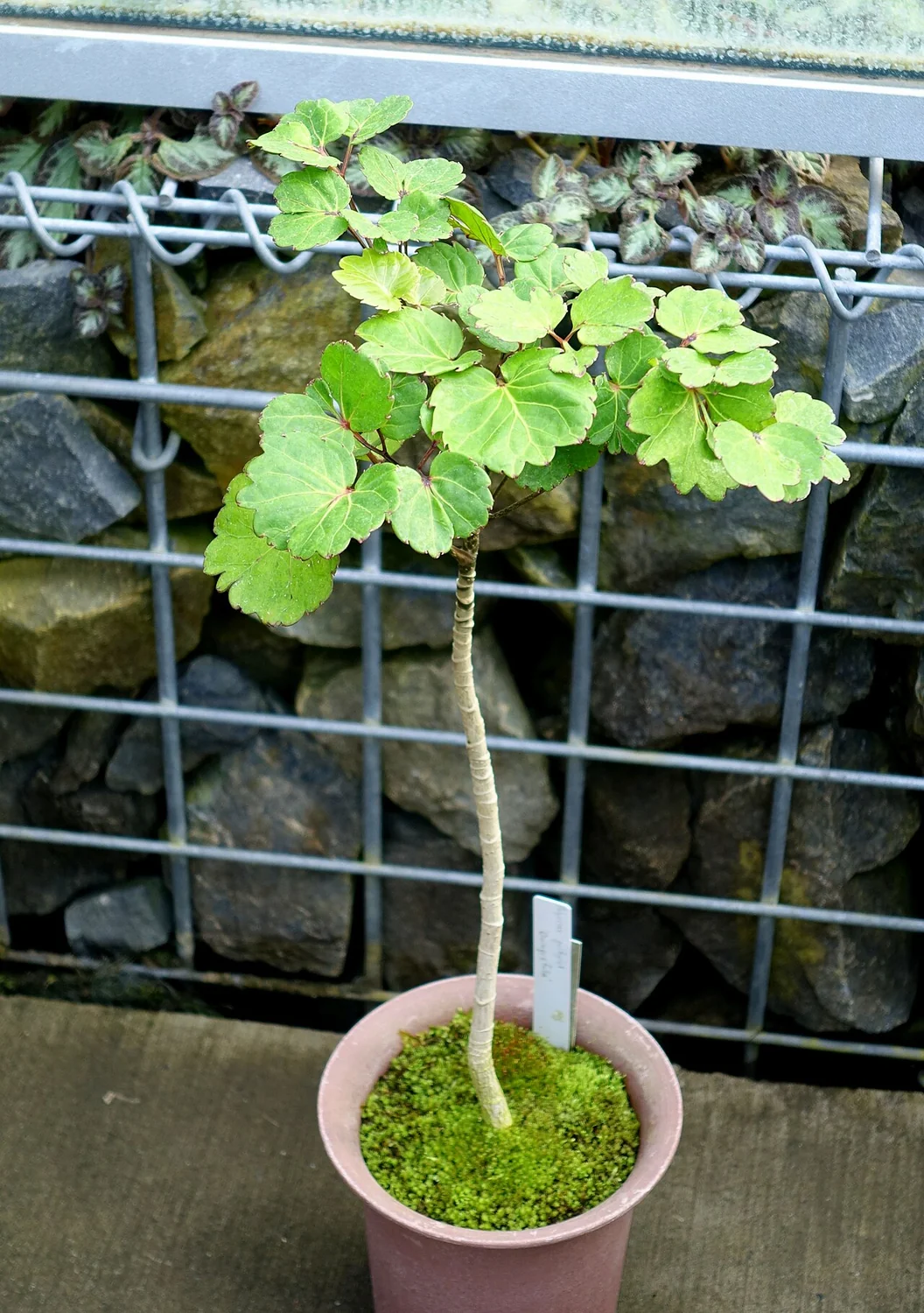
An aralia with a geranium resemblance
Geranium leaf aralia is a tropical woody plant with a name that describes a resemblance rather than a close relationship to bedding geraniums. Polyscias guilfoylei belongs to the aralia family and has compound foliage whose leaflets can be broad, irregularly cut, green, or edged with pale variegation. Botanical references place its origins in eastern Malesia and the southwestern Pacific, and long cultivation has made it familiar in other tropical regions. Indoors it can develop into a small upright tree, although the eventual outline depends on the selection and pruning. It is a foliage subject in a room, not a plant whose success depends on producing flowers.
Look closely at the particular plant before choosing a location. A variegated selection with broad pale margins has a different visual effect from an all green plant with more divided foliage, and both may be sold under a simplified aralia label. Retain the name supplied by a reputable grower and photograph the original foliage for comparison. Inspect the lower stems for firmness and the upper branches for living tips. A tall specimen with leaves only at its ends may need more work and better light than a smaller evenly furnished plant. Avoid buying solely on the decorative effect of an exposed trunk.
Light and a workable indoor position
Bright indirect illumination supports a useful balance between leaf retention and steady extension. A little morning sun can be appropriate after the plant is accustomed to it, whereas sudden hot afternoon exposure can damage leaves formed under shade. Place the tree where light reaches across the crown, not only the face seen from the doorway. The pale portions of variegated leaves cannot compensate for an otherwise dark location. If new stems lengthen weakly toward a window, improve the exposure before tightening the pruning routine. A bright room with a warm stable night temperature is more suitable than a cold glazed corridor that looks sunny only during the afternoon.
Water, roots, and a draining container
Allow the mix to dry partially between thorough drinks, assessing deeper moisture as well as the surface. When watering, distribute it through the full root ball and let the surplus escape. Remove any collection beneath the inner pot. A dense nursery ball surrounded by fresh loose mix may not absorb water at the same rate as its new surroundings, so check both after a repot. Do not use the colour of the decorative surface layer as the sole guide. A pot can appear dry beneath stones while remaining saturated lower down. Conversely, a small root ball may have dried while the unused outer compost still feels damp.
Cold exposure is a particular concern for a tropical aralia. A plant that loses foliage after a chilly journey or an overnight temperature drop should not automatically receive more water, because reduced leaf area may already have slowed water use. Check the stem and root condition before responding. Protect the tree from the immediate stream of a heater or air conditioning unit as well as from outdoor drafts. If winter humidity is unusually low, consider the ambient room rather than repeatedly wetting the leaves. The aim is stable growth, with enough gentle air circulation to avoid a stagnant wet canopy.
Training and ongoing maintenance
Repot into a modest increase in volume when roots fill the available space or the existing medium no longer behaves predictably. A structurally open indoor mix is more manageable than heavy soil packed tightly around the base. Preserve the previous planting depth and avoid burying old stem tissue. If a tall tree needs more stability, a broad heavy outer cover can provide support without forcing the roots into a large unused volume. Check that the functional inner pot can still be removed. Maintenance becomes difficult when every watering requires wrestling the crown out of a decorative vessel that is too narrow at the opening.
Selective pruning can develop a more balanced small tree. Shorten an overly long shoot above useful living growth and allow the plant to branch before deciding what to remove next. Do not assume every bare section will regenerate immediately after a severe cut under weak light. The tree's relatively slow indoor response makes gradual structural work more sensible than repeated drastic clipping. Stem cuttings may be used to retain a selected form when suitable material and controlled conditions are available. Keep the identity of the source plant with each cutting, since seedlings or unlabelled aralia material may not reproduce the appearance that was originally chosen.
Clean broad leaflets gently and inspect their undersides, the leaf stalks, and branch junctions. Mealybugs, scale, and mites can be overlooked in a dense crown until foliage becomes sparse. A sticky patch below the plant can be a useful clue. Feed during active growth at an appropriate houseplant dilution, accounting for nutrients already in new compost. Do not increase fertilizer simply because a leaf has yellowed; root saturation, low temperature, or inadequate light can create similar visible changes. If several problems are suspected, establish a sequence of checks and make the most relevant correction first, leaving enough time to observe new growth.
Meaning without unsupported promises
Its compound leaves and upright framework can suggest a layered, carefully assembled composition. A giver may connect that appearance with creativity or the gradual building of a home, but such symbolism should be identified as personal. The species has documented ornamental uses in tropical hedges and gardens, and specific regional practices need their own context. They should not become an unsupported claim that every potted aralia brings protection, prosperity, or a health benefit. The common name also does not transfer the cultural meanings of unrelated geraniums. An accurate botanical story is more interesting than a convenient but invented tradition attached to an attractive label.
A gift matched to the recipient
Geranium leaf aralia can suit an attentive plant owner celebrating a new study, a creative milestone, or the establishment of a warm bright home office. Ask about the intended place and care routine before selecting a large specimen. It is not an ideal gift for a recipient whose room regularly becomes cold or whose travel leaves small pots unchecked. Treat leaves as ornamental and keep cut material out of casual reach of children and animals. Include the selection name if known, because that information helps the owner recognize normal colouring. A healthy tree with a workable pot and a realistic size is a more lasting gesture than an imposing but unsuitable display.