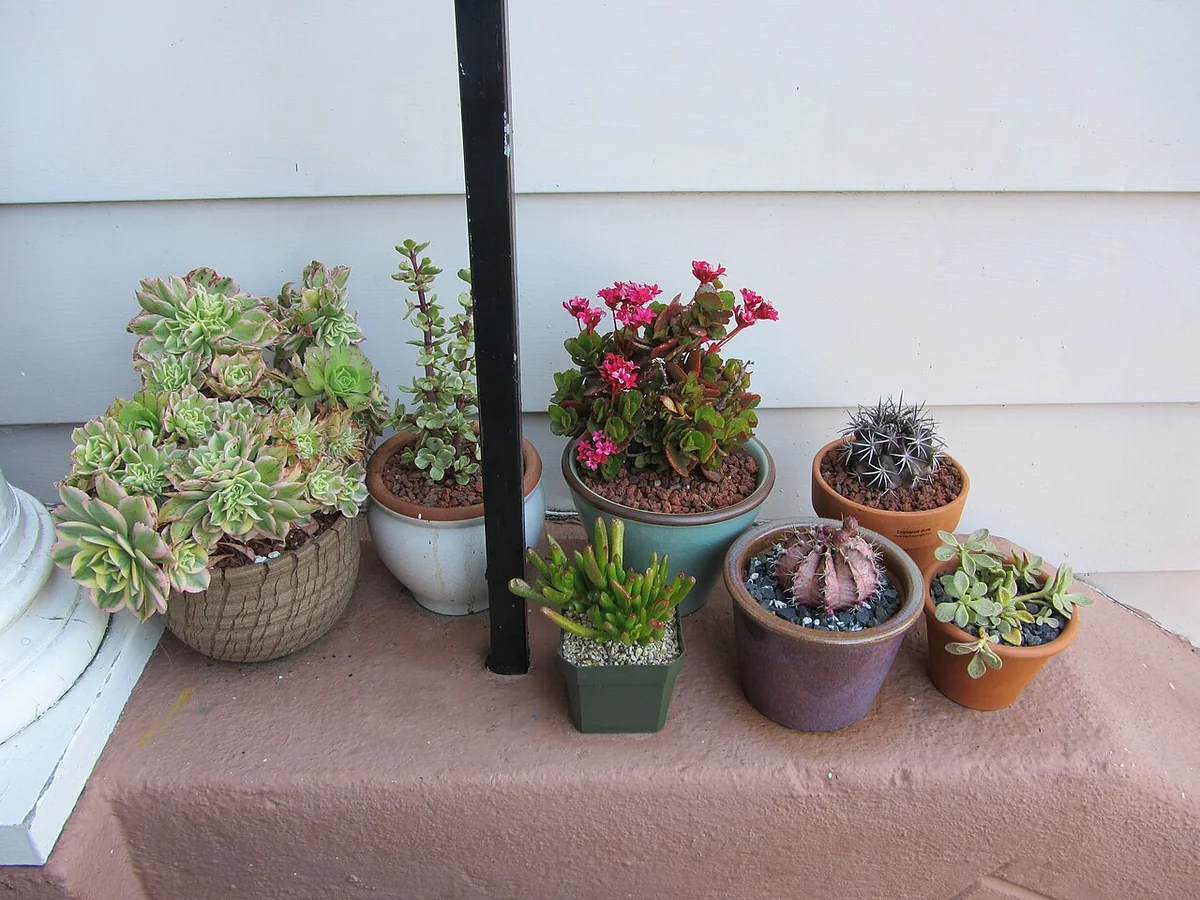
Elephant bush makes its own kind of small tree
Elephant bush can develop a thick branching base and a light canopy of small succulent leaves, making Portulacaria afra a useful subject for an informal indoor tree or succulent bonsai. It is often called dwarf jade, but it is not simply a small form of the familiar Crassula jade plant. That distinction matters when comparing identity and growth. A well lit plant can be trained gradually into a convincing little framework without keeping its roots in a traditional shallow bonsai pot from the beginning. The tree form is a growing decision, not an immutable shape purchased with the container.
The species is native to southern Africa, where it can form substantial shrubs and small trees in warm dry landscapes and thicket vegetation. Its rounded leaves and reddish young stems store resources in a way that helps it cope with dry periods. That ability should be understood as an adaptation, not as permission to leave a small indoor pot unobserved indefinitely. Named variegated or prostrate forms have their own ornamental characteristics and can grow differently from a plain green upright selection. Keep the nursery label if a particular form is important to the intended design or gift.
Light determines the outline
Give elephant bush a very bright position and introduce direct sun gradually after nursery shade or a dim indoor period. Compact leaf spacing and firm branching are easier to maintain when the crown receives useful light. A tree that stretches toward a distant window is telling the grower about its position, not asking first for a different pruning tool. Rotate modestly for even development if the branches remain accessible. In a shared office, a genuinely sunny window may work, but an attractive spot deep inside the room is a different environment. Normal overhead lighting should not be presumed to replace the missing sun.
An outdoor summer can help where weather is suitable, with acclimation and protection from cold. A succulent that has adapted to indoor light can still burn when suddenly exposed to hot direct sunshine. Keep the pot stable and avoid a constantly rain soaked position if the medium drains slowly. Before winter, move the tree to bright frost free protection as appropriate to the local climate. Its growth may slow with weaker light, and that should influence both watering and feeding. A single year round schedule does not account for the changing balance between warm room temperatures and available winter daylight.
Water storage changes the interval, not drainage
Use an open succulent medium and a pot with clear drainage holes. The container should suit the roots and support the developing trunk without enclosing a small root ball in a large unused volume of damp mix. Keep the established planting depth. Decorative outer pots need to be emptied, not used as permanent reservoirs. A conventional nursery pot may be more manageable during the early years than an extremely shallow bonsai dish. The tree can develop structure while its root system remains accessible and easier to care for, then be refined into a different presentation when growth and experience justify it.
Water thoroughly when the root mix has dried sufficiently, then allow excess to leave. Learn the weight of the pot and inspect below any top dressing before choosing the next drink. Succulent leaves hold water, so the root zone should not remain continually saturated as it might under a generic tropical houseplant routine. In a cooler or darker period the interval usually extends. On the other hand, a small actively growing plant outdoors can use water faster than expected. Observe firmness and new growth together with the roots rather than judging from a single leaf that has been knocked or shaded.
A framework built through selective cuts
Allow a useful trunk and main branches to develop before trying to produce every fine detail of a finished bonsai. Shorten selected shoots above suitable nodes and retain foliage where it supports the intended structure. Thick succulent branches can be brittle or marked by tight wire, so thoughtful clipping is often a more approachable starting technique than forcing mature stems into bends. Let pruning serve light distribution as well as appearance. A dense outer canopy can shade its interior, and repeated trimming of only the tips may conceal weak growth rather than creating a sound small tree.
Repot when roots or deteriorating medium call for it, using a proportionate container and avoiding unnecessary severe disturbance. Where fresh cut surfaces are created, keep them from being packed immediately into persistently wet material. Propagation from suitable stem cuttings is often possible, but allow the cut surface to settle and give a new cutting an airy rooting environment. A rooted cutting and a mature specimen have different reserves, so do not treat both with exactly the same interval without observation. Feed modestly during active growth with a suitable product, avoiding concentrated attempts to accelerate the trunk's apparent age.
Flowers are optional in the indoor display
Small pink flowers can occur on established plants under suitable conditions, but their absence indoors does not invalidate the tree. Elephant bush is usually grown in a room for its trunk and foliage rather than for a guaranteed annual flower show. Look between branches and beneath leaves for pests such as mealybugs, particularly after a new purchase joins a collection. A softening dark base deserves prompt root and moisture inspection. Clean fallen debris without continually rearranging the pot. The best diagnostic record includes where the tree stood, when it was watered and whether it was actually making growth.
The tree can carry a personal meaning of resilience or gradual development because of its branching habit and succulent structure. Those are interpretations, not proof that keeping elephant bush brings wealth, removes pollution or changes a household's fortunes. It may suit a housewarming gift for someone with a sunny window, or a bonsai introduction for a grower interested in shaping rather than immediate exhibition results. A person with limited time may find it more manageable than a moisture sensitive fine rooted bonsai, but only if their growing site is bright and they are willing to observe the root mix.
Make the first years practical
Choose a pot that the recipient can lift or inspect and include the exact botanical name so it is not confused with another jade. Explain the current medium and the need to let it dry appropriately rather than supplying a fixed calendar. Keep ornamental nursery plants away from unsupervised tasting even when a species has documented uses elsewhere. Start with useful light, sound roots and a clear intended framework. A modest trunk that thickens and branches through normal growth is a more honest success than a weak specimen continually pushed to look old through severe cuts and heavy feeding.