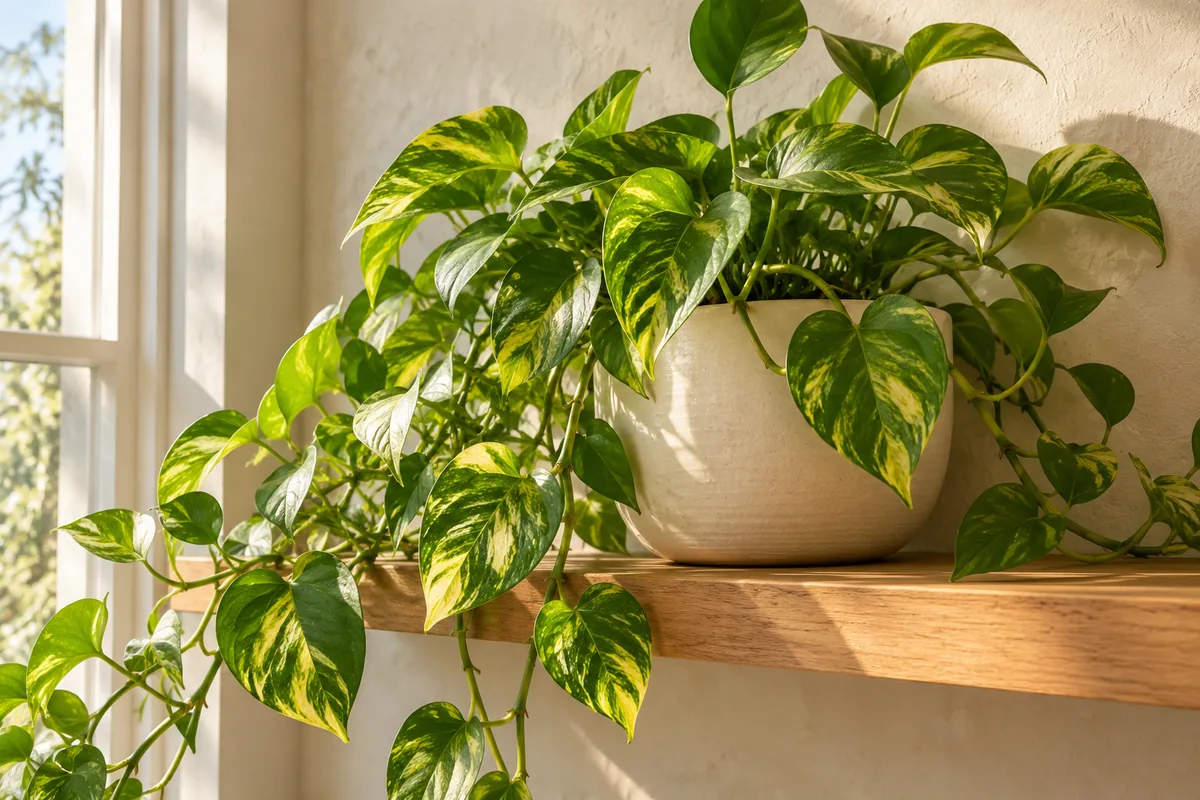
A length of pothos vine can contain several opportunities for a new plant, but the leaf itself is not the whole cutting. The important section is the node, where a leaf joins the stem and a small aerial root or bud may be visible. A leaf stalk cut away without a piece of that stem does not provide the same growing structure. Before making any cuts, follow the vine with your eyes and identify the joints clearly. This small pause makes the rest of the process more deliberate. You can choose a useful section without removing more of the parent plant than necessary or leaving an attractive leaf attached to no viable node.
Select firm growth from a plant that is growing well and has no unexplained deterioration. A moderately developed vine is easier to handle than a very soft emerging tip or a long bare section with little remaining foliage. Use clean sharp scissors or pruners and make a neat cut that includes a suitable node. A cutting with a small number of leaves is usually more manageable than a long heavy vine. Keep plant material away from food preparation surfaces and use gloves if needed while handling cut stems. Decide whether you will root the cutting in water or an appropriate medium before taking it, so the prepared section is not left drying on the table.
For water rooting, use a clean container that supports the cutting with the node beneath the water and the leaves above it. Remove any lower leaf that would otherwise remain submerged, preserving the node itself. A narrow opening can hold a short cutting conveniently, yet make sure developing roots will later pass through it without tearing. Plain suitable water is enough to begin; concentrated feed is not needed to persuade the first roots to appear. Position the container where it will remain upright and easy to inspect. A clear vessel is useful for observation, though it should not be placed in strong sun that heats the small water volume.
Maintain clean water and an appropriate level around the node. Refresh it when it becomes cloudy or otherwise needs changing, and rinse the container as necessary without scrubbing the new roots. Avoid repeatedly removing the cutting for photographs or root measurements. Stable contact is more useful than frequent handling. Roots develop at different speeds depending on temperature, light, and the cutting, so do not treat a particular day count as a promise. If the stem becomes soft or deteriorates, inspect it rather than leaving it indefinitely in the same water. A firm cutting with gradually extending roots offers a different picture from one whose base is collapsing.
Direct rooting in a suitable medium is another option. Use a small drained container and lightly moistened propagation medium that provides close contact without becoming a dense saturated mass. Make an opening first, place the rooted area or node appropriately, and keep leaves above the surface. Settle the material gently around the stem. The cutting should stand securely without hard packing. Keep moisture even while roots develop, checking rather than adding water daily by habit. A cover may be useful in some setups, yet persistent condensation and stagnant wet leaves are not the objective. Provide suitable light and inspect any enclosed arrangement regularly, allowing ventilation appropriate to the conditions.
Place either method in bright filtered light with a steady warm room temperature, away from strong direct sun and heating or cooling drafts. The parent pothos may tolerate a less bright position, but a cutting benefits from useful light while building roots. Avoid moving the container repeatedly from room to room. Watch the firmness of the leaf and stem, while remembering that a new leaf can begin from existing reserves before roots are fully established. Rooting hormone is not generally necessary for ordinary pothos cuttings. A simple setup makes it easier to understand the effect of moisture, light, and the quality of the cutting itself.
When a water rooted cutting has a practical small network of roots, prepare its first pot. Choose a container proportionate to those roots with drainage and a suitable fine enough houseplant mix. Make space for the roots rather than pushing them through packed material. Guide them gently, keep the leaves above the surface, and settle the mix around them. Water appropriately and allow surplus to leave. During the transition, maintain even moisture suited to the young root system without leaving the pot in standing water. The cutting now needs to establish contact with the mix, so the first small pot is more useful than a large planter chosen for future vines.
As the new pothos settles, watch for steady growth and a predictable drying pattern. Keep the plant in suitable light and allow the roots to occupy the current container before enlarging it. Several established cuttings can eventually share an appropriately sized pot if a fuller plant is wanted, but each needs enough root contact to establish. Do not feed heavily to accelerate the process, especially if the mix already contains nutrients. A clear node, a manageable cutting, and consistent conditions provide the practical foundation. The reward is a plant whose beginnings you can understand, with each stage linked to the roots and growth actually present rather than to a rigid timetable.