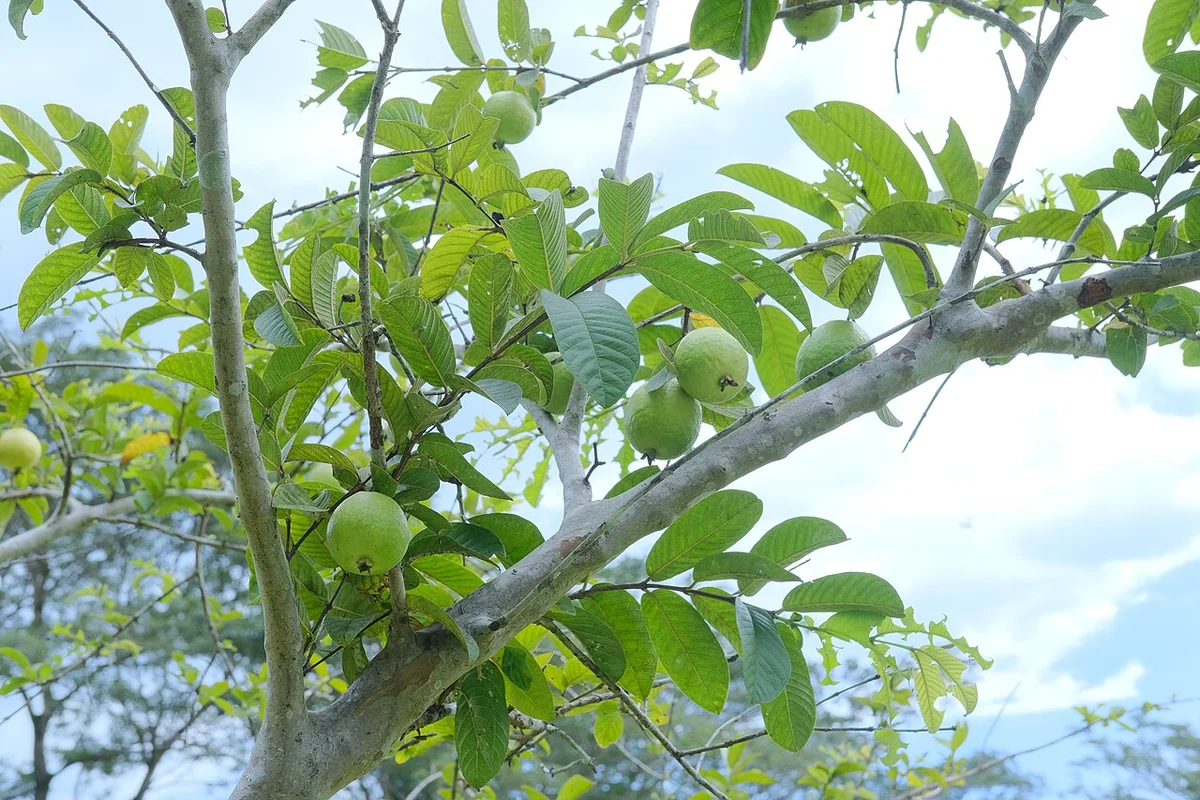
Guava needs more than a decorative corner
Common guava can develop an appealing small tree framework, with strongly veined leaves, distinctive bark and white flowers when conditions permit. Psidium guajava is a tropical fruit tree, however, and its indoor role should be understood as a bright warm conservatory project. A shaded office may keep a purchased specimen on display briefly without providing the energy needed for sustained branching or a crop. Start by deciding whether the interest is foliage, fruit or both. A realistic ornamental aim is valuable in its own right; a promised bowl of homegrown guavas is a different commitment that depends on much more than the size of the sales pot.
The species comes from the American tropics and has been moved widely through cultivation. Long use as a fruit crop has produced selections differing in fruit size, colour, flavour and vigour. The nursery name therefore matters when a crop is the goal. A seedling raised from a shop fruit is a botanical experiment, not a guaranteed compact copy of that fruiting tree. Its eventual size also remains relevant: container cultivation and pruning can manage growth, but an ordinary guava does not become a naturally dwarf species simply because it begins life on a windowsill. Ask about a selected compact form before buying a large unknown plant.
Sunlight and a warm annual plan
Provide a sunny growing position with room for the leafy crown. Introduce protected foliage gradually to stronger direct exposure, particularly when moving a young tree outdoors for summer. A conservatory can become excessively hot, so light, ventilation and root temperature should be assessed together. Keep leaves from pressing against glass. A taller tree may rise above the best part of a low window, making useful canopy illumination less rather than more adequate as it grows. If supplementary light is part of the plan, choose coverage suited to the whole tree instead of relying on an ordinary ceiling fitting across the room.
A suitable warm outdoor season can help the plant make firmer growth, but return it to adequate protection before conditions become too cold. Do not use a summer balcony's available space as the only measure of how large a tree you can accommodate. The winter room and the route into it must also fit the crown and watered container. Protect the plant from cold draughts and avoid direct heating vents that create a dry hot patch around one side of the leaves. A stable bright position makes the tree's seasonal response easier to understand than frequent moves between differently lit rooms.
Roots supporting a fast changing canopy
Use a fertile open container mix and a substantial draining pot. Preserve the original root collar level and inspect roots before deciding how far to increase container size. A very large volume of unused wet medium can be problematic around a small root ball, even on a vigorous fruit tree. Keep outlets clear and empty any decorative outer cover. A young trunk may need support while it establishes, but ties must not tighten unnoticed. Look for root or stem movement when the crown is handled, since rocking can disturb newly developing roots and makes a large container harder to settle after repotting.
Water growing guava roots thoroughly when they approach their next need, avoiding both repeated complete drying and continuous saturation. A broad leaf canopy can use water rapidly in warm sunshine, while a cooler dimmer period changes the interval. Check below the surface and learn the pot's weight. Do not assume a preference for adequate moisture means leaving the base in a puddle. If leaves wilt while the medium remains wet, investigate the root environment. A dry original nursery root ball inside newer damp mix presents a different problem and may need careful even wetting rather than another splash around the outer edge.
Flowers depend on useful new growth
Guava flowers are carried on growing shoots, so regular hard clipping can work against an intended crop. Maintain a balanced accessible framework and remove damaged or congested growth deliberately. A small tree does not need to support every fruit it initially sets. Give active growth an appropriate fertilizer at its instructed rate, accounting for nutrients in fresh medium. More feeding cannot replace sunlight or correct injured saturated roots. Indoors, successful pollination and fruit development can be inconsistent. Treat flowers as an interesting part of the plant's growth rather than a contract that the tree must fulfil with a large harvest.
Before expecting fruit, learn the particular selection's mature appearance and requirements. Guavas sold under one common name can differ substantially from the fruit pictured in a general guide. A nursery specimen produced ornamentally may also have a different treatment history from a food crop. Confirm intended use before eating fruit already attached at purchase. Do not distribute seeds or discarded fruit into a garden casually. Common guava can spread aggressively in suitable warm regions, and local horticultural advice may recommend against planting it. A contained conservatory collection still needs responsible handling of fruit, seedlings and unwanted plant material.
Inspect bark, leaves and the root surface
The tree's ordinary bark changes should be distinguished from soft damaged tissue, and its naturally prominent leaf veins should not be mistaken for every nutrient problem. Look at the pattern and speed of any change. Check sheltered leaf undersides and shoot tips for insects before a summer plant returns indoors near other specimens. Remove dead material from the pot without repeatedly disturbing roots. If several interventions appear necessary, identify the most likely problem first rather than pruning, repotting, feeding and relocating the tree simultaneously. A record of the previous growing position and moisture pattern helps make that judgement more reliable.
Guava can make a meaningful gift for a fruit enthusiast with an established warm sunny conservatory. Its personal significance may be a connection with family food, tropical cultivation or a wish to learn about fruit trees. Those associations should come from the recipient rather than from an invented universal symbolism. It is not an ideal surprise for someone with a dim office or no room to move a growing tub. Ask about local planting guidance as well as indoor space if the person may eventually plant it outside. A well intentioned gift should not become an unsuitable landscape tree when it outgrows its first room.
Keep the crop identity with the tree
Include the cultivar or propagation label, the supplier's information about fruit use and the current container arrangement. Choose a pot that can be watered and drained safely, leaving room to inspect the trunk and roots. During the first full growing season, aim for firm leaves, balanced new shoots and a workable annual location. A modest tree grown honestly as a foliage and learning project can be more successful than an overburdened specimen forced to keep every fruit. Guava's appeal is the chance to observe a cultivated tropical tree closely, with any safe later crop developing from conditions that genuinely support it.