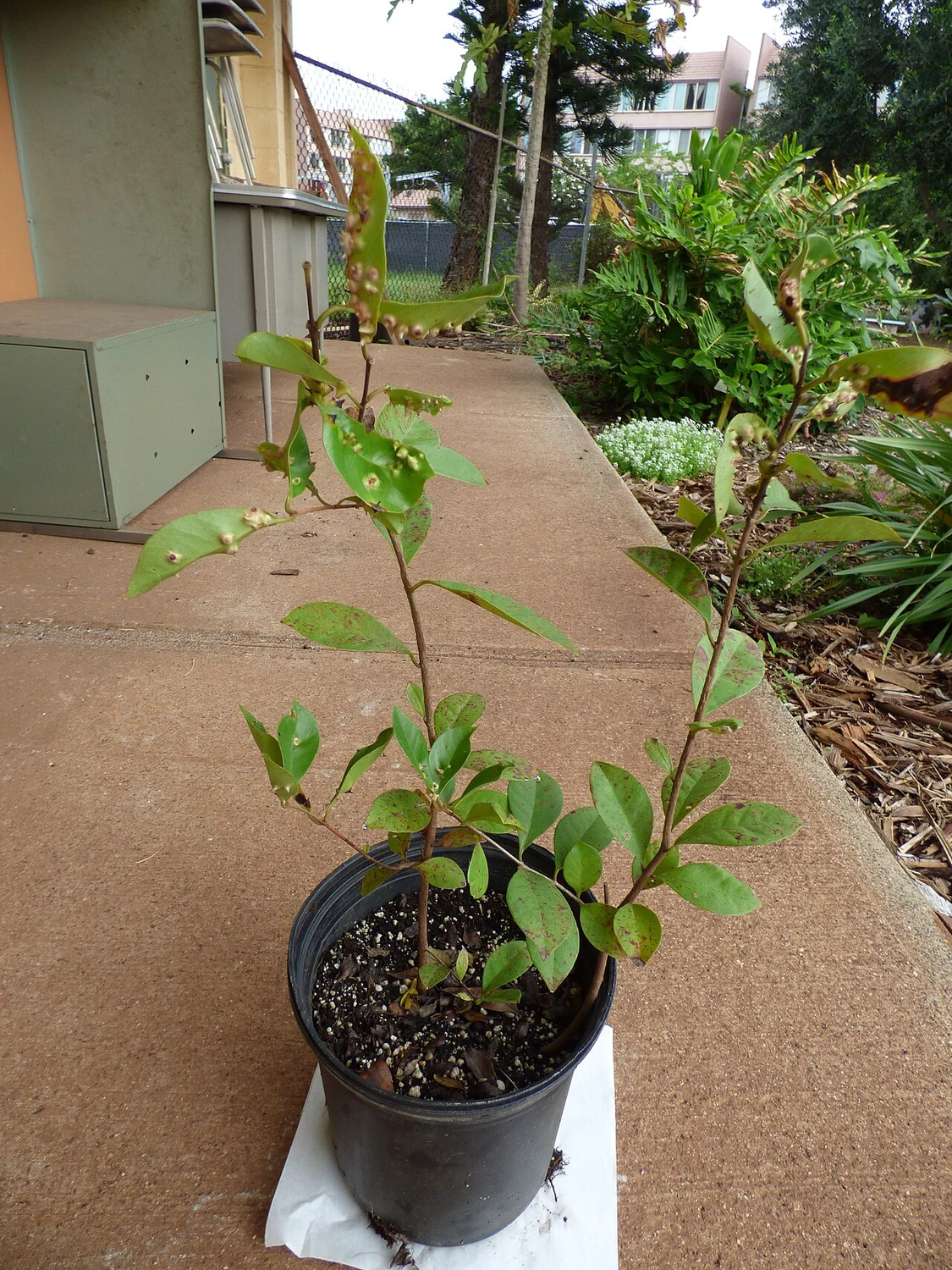
Strawberry guava is a separate guava species
Strawberry guava can make an attractive compact looking tree with glossy rounded leaves and a woody framework that lends itself to container shaping. Psidium cattleyanum is also spelled Psidium cattleianum in many horticultural sources. It is distinct from the larger common guava, and its fruits should not be described simply as miniature versions of the same crop. The tree can interest a grower with a bright protected space, but a neat nursery specimen does not automatically belong in a shaded office. Give serious thought to the light, eventual vigour and seasonal movement before choosing it as an indoor display.
The species has South American origins and has been introduced widely outside its native range. Red and yellow fruited cultivated forms may be encountered, which makes a precise nursery label useful if fruit is part of the purpose. A seedling need not reproduce the exact character that attracted the buyer to a photographed specimen. The long term tree can also exceed the scale implied by a small pot. Choose a form and maintenance plan appropriate to the conservatory rather than assuming that the common name strawberry predicts a low growing berry plant. Its trunk, leaves and roots belong to a woody guava relative.
Bright protected growth rather than interior shade
Provide abundant daylight and suitable sun after acclimation. A protected tree moved outdoors for summer should begin with gentler exposure before reaching the final position. Check the temperature of the pot as well as the air around the leaves, especially beside sun warmed paving or glass. In a conservatory, ventilation can be as important to the arrangement as finding the brightest corner. Avoid putting a tall plant behind furniture that shades its lower crown and makes the container difficult to reach. The keeper needs a workable growing station, not merely a visually pleasing place to hide a tub.
Seasonal protection should reflect local conditions and the tree's actual nursery history. Do not assume that a reputation for tolerating some cool weather makes a small exposed pot immune to frost. Roots in containers experience weather differently from established roots in the ground. If winter accommodation is needed, identify a bright suitable place and plan the route into it before branches become too wide. A regularly heated room may offer warmth but inadequate light. The balance of exposure, temperature and root activity should guide the winter routine, rather than continuing the summer watering and feeding pattern unchanged.
A dependable root environment
Use an open fertile container medium with actual drainage through the base. Keep the previous collar level and increase pot size sensibly when roots or declining mix justify it. A large decorative tub full of unused damp material can be harder to manage than a proportionate container. Check stability under the developing crown and inspect any supporting tie as the trunk thickens. A sealed outer pot should not retain runoff after watering. The visible glossy leaves give only part of the story; lifting or otherwise accessing the inner root container remains an essential part of understanding what the plant needs.
Water the occupied root ball when it begins to need replenishment, wetting it evenly and letting excess escape. A sunny actively growing guava may use moisture quickly, while a cool protected specimen can remain damp much longer. Test below the upper surface and learn the pot's changing weight. Repeated complete drying can damage new growth, but persistent saturation is not a safe alternative. If foliage loses firmness over wet mix, investigate roots and temperature before adding another drink. If the central nursery root ball has dried separately from surrounding material, address that difference rather than judging the whole pot from one superficial touch.
Choose between formal clipping and a crop
Strawberry guava can be maintained for a neat canopy, but frequent clipping may remove growth that would contribute to flowers and fruit. Decide which aspect matters most before shaping. Thin or shorten branches with attention to light and access within the tree rather than creating only a dense outer shell. Use appropriate nutrition during active growth at a measured labelled rate, taking account of any fertilizer in fresh medium. A lack of fruit indoors may reflect growing conditions or maturity; it is not automatically a reason to increase food or repot into a much larger container.
White flowers and small coloured fruits can be appealing when they appear, but they do not make this an uncomplicated landscape recommendation everywhere. Strawberry guava is invasive in some warm regions and can spread through discarded or animal dispersed seed. Check local horticultural guidance before outdoor planting or passing on seedlings. Keep fallen fruit and unwanted material contained. A nursery tree intended ornamentally should not be treated as an immediate food source without knowing its identity and treatment history. The responsibility attached to the crop includes where its seeds go, not only whether the fruit looks attractive in a conservatory photograph.
Maintenance includes the less visible growth
Inspect leaf undersides, new shoots and sheltered branch junctions for pests, particularly before returning a summer plant indoors. Clean accessible foliage gently if dust obscures its surface. Look at whether a change affects one exposed side, the newest leaves or the whole crown. That pattern helps separate light, pest and root questions. Avoid responding to every imperfection with a different supplement. If a tree has just moved, record the change and observe it in an appropriate stable position. Several simultaneous alterations to pot, pruning and watering can hide the cause of a problem rather than resolve it.
The tree can be a thoughtful present for a grower who enjoys observing less familiar fruit species and has suitable bright protected space. Its personal meaning might be curiosity or a link with a particular cuisine or garden memory. It does not need claims of guaranteed abundance, good luck or beneficial effects on the room's air. Ask about local planting advice, the recipient's ability to move a container and whether they want a fruiting project or simply foliage. An enthusiast may welcome those distinctions; a person expecting an almost maintenance free office decoration may find the same tree an unwanted burden.
A contained, accurately labelled first season
Pass on the full botanical name, the fruit form if known and any cultivar or propagation information. Include the supplier's guidance about food use and a practical draining container. Avoid gifting an unlabelled seedling as though its future crop and size were certain. During the first year, establish a stable annual position, useful light and a clear moisture assessment. A healthy framework with an appropriate containment plan is already a worthwhile result. Any later fruit should follow from suitable growth, not from pressure to recreate a heavily laden nursery image in an ordinary shaded room.