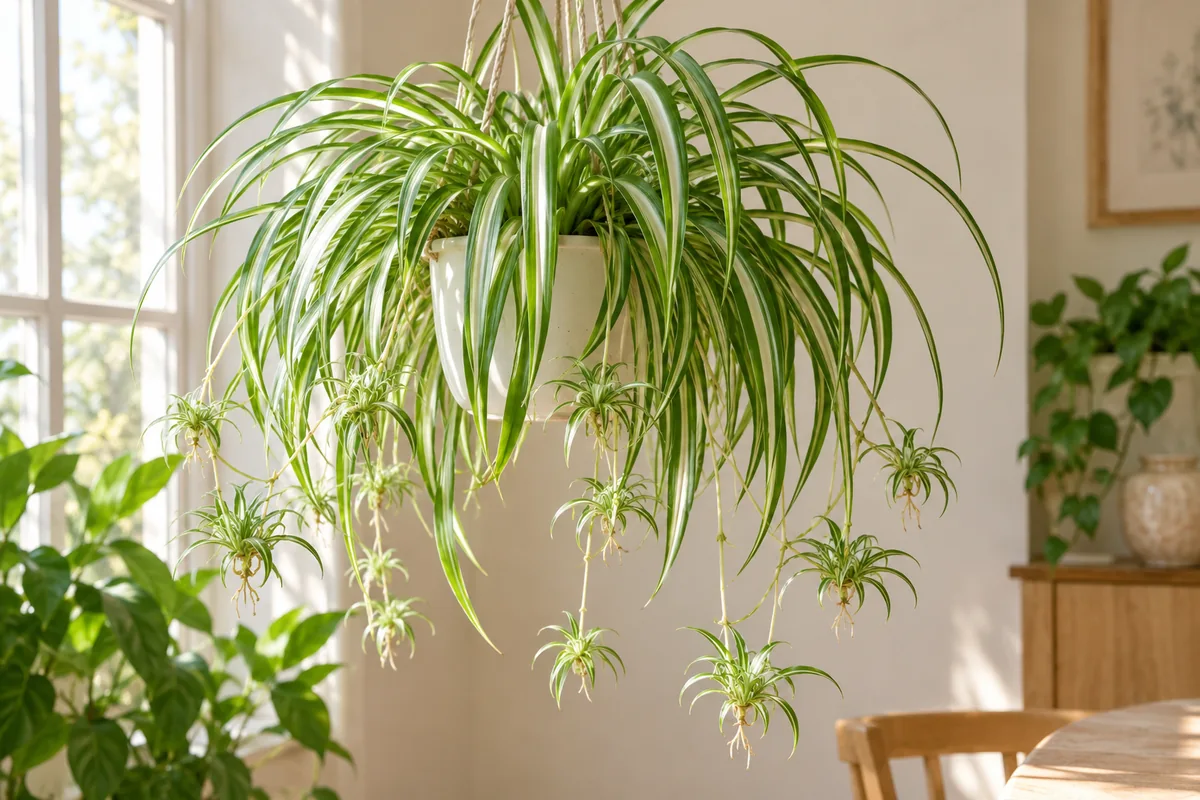
A spider plant's hanging plantlets look like miniature versions of the parent, which makes them an inviting place to begin propagation. Look closely beneath a developed plantlet and you may see small root beginnings around its base. Those structures are more useful than the length of the runner holding it. A tiny newly formed cluster can be left to develop longer, while a firm plantlet with several leaves and a defined base is easier to handle. Choose one that the parent can spare without dismantling the entire display. You can root it while it remains attached where the setup allows, or separate it cleanly and give it a small growing space of its own.
Prepare a small drained container and a suitable lightly moistened medium before taking the offset. The pot should match the small root base rather than the mature spider plant you hope it will become. Too much unused mix can stay damp while the young plant has only a limited capacity to use water. A fine enough texture helps new roots contact moisture, with enough structure to avoid dense saturation. Keep a clean tool nearby if you will separate the runner. There is no need for a large decorative planter at this stage. A simple nursery pot makes it easier to inspect the base and learn the first watering pattern.
For an attached method, place the prepared pot near the parent and rest the plantlet's base against the medium. Secure it gently if necessary without crushing the crown or burying the leaves. The runner should reach comfortably without tension or a sharp bend. This arrangement lets the plantlet begin rooting while still connected, provided the pot can remain stable and receive suitable light. Keep the medium evenly moist and inspect the contact point. Do not place the small pot where watering the parent will flood it repeatedly. Once the plantlet has established roots and begins growing independently, the connecting runner can be cut with a clean tool.
For a separated offset, cut the runner cleanly near the plantlet without damaging its basal growing area. Set the base into the prepared medium so the root beginnings make contact, keeping the crown and leaves above the surface. Gently settle the material around it rather than pushing the whole plantlet deep into the pot. A small temporary anchor can help if the offset rolls sideways, but it should not press on soft new leaves. Water carefully to settle the medium and let excess drain. The objective is consistent contact around the roots, not a tightly packed surface or a reservoir beneath the container that keeps the entire pot saturated.
Water rooting is another way to observe the first roots. Use a clean shallow vessel that supports the plantlet with its root base in contact with water and the crown above it. Avoid submerging the leaf cluster. Keep the water clean and inspect for soft deteriorating material. Once a useful small root network has formed, move the offset into an appropriate first pot with gentle handling. Do not let roots become so tangled in a narrow opening that removal tears them. Water formed roots still need to establish contact with the new mix, so maintain appropriate even moisture during the transition rather than treating the young plant immediately like a mature drought tolerant specimen.
Provide bright filtered light and a stable suitable room temperature. Protect the plantlet from direct strong sun and from warm or cold drafts. The parent may tolerate a broad range of conditions, yet a newly rooting offset has a smaller reserve and benefits from consistency. Avoid sealing it permanently in a wet enclosure without inspection. The leaves should have space around them and should not press against a dripping cover. Check the medium frequently because small pots can change quickly. Frequent checks are different from frequent watering: add water when the root environment needs it, not simply because you are looking at the plant every day.
New leaves and a gradually firmer connection to the medium indicate progress over time. Avoid repeatedly tugging the offset to test its roots. A plant can be loosened just as it begins establishing. If it wilts, check moisture and placement before assuming more water is required. A wet small pot can still contain a struggling root base. Keep feed modest and wait until the plant has settled into active growth, especially if the mix already includes nutrients. Label the date if several offsets are being compared, and judge each by its own roots and water use rather than expecting every plantlet from the same runner to develop at an identical pace.
As the new spider plant fills its first container, ordinary care becomes more familiar. Maintain suitable light, water according to the medium, and empty the saucer or cover. Enlarge the pot only when the roots and drying pattern show that more space would be useful. A plantlet can produce an appealing tuft of leaves while still benefiting from a compact root zone. Several plants can share a container later when their combined roots suit the volume. The beginning remains simple: choose a developed offset, keep its crown clear, and provide steady contact with moisture around the root base. That gives the young plant a practical route from hanging miniature to independent container plant.