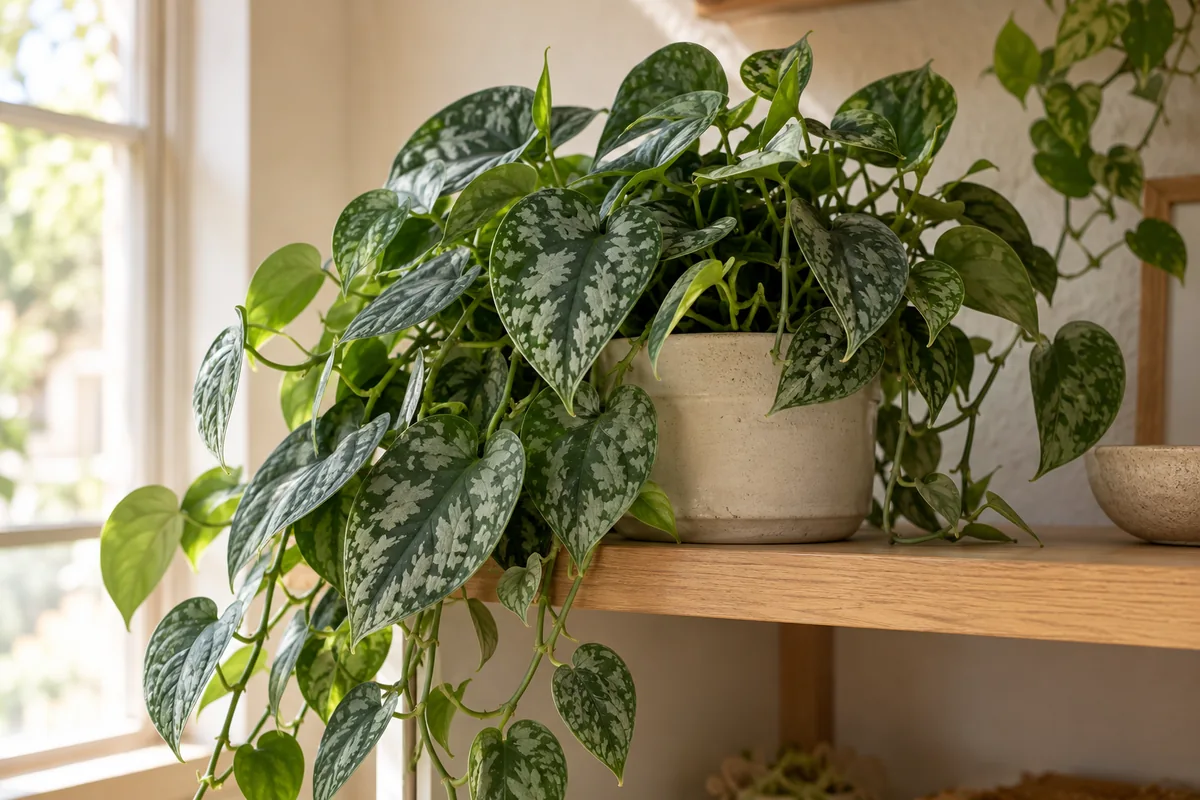
A satin pothos vine can offer a useful cutting well before it becomes long enough to trail across a whole shelf. The important detail is the stem beneath the silver patterned leaves. Scindapsus pictus needs a viable node and growing point to become a new vine; a decorative leaf by itself is not a reliable starting plant. Choose a short section you can support easily, rather than the longest length available. Look for firm tissue and leaves that have retained their normal shape. An already struggling vine should have its growing conditions corrected before it is divided into several pieces that will need to establish new roots.
Trace a leaf stalk to the stem and find the slight joint where it attaches. That joint is a node, often accompanied by a small root nub. Select a piece with a few useful nodes so you have options for positioning it. Cut below the lowest selected node with a clean sharp tool. Remove only leaves that would otherwise be submerged or buried, leaving a modest upper canopy. Keep the orientation clear when you prepare a middle section without a growing tip. A quick photograph before cutting can help. Place the pieces on a clean surface and label them immediately if you are working with similar vines at the same time.
For water propagation, choose a vessel that supports the stem without forcing the leaves into the opening. Submerge the lower node and keep every leaf above the surface. The whole vine does not need to be underwater. Refresh the water regularly and clean the container whenever film or cloudy residue appears. A clear jar makes developing roots visible, but it should sit in indirect light rather than a hot sunny window. Check the stem itself at each water change. Firm tissue and clean water are more useful observations than the number of days since the cutting was taken. Rooting speed varies with the plant, season, and room.
Direct rooting in a medium is another practical route. Use a small pot with drainage holes and a loose mixture that can stay lightly moist without becoming dense. Fine perlite and a little suitable potting material give the lower node contact with moisture and air. Make a hole before inserting the stem so the cut surface is not scraped against coarse particles. Keep leaves and their stalk bases above the mix, and support the cutting if it leans. A deep heavy pot is unnecessary. The unrooted piece removes very little water, so the size of its container has a direct effect on how manageable the moisture becomes.
Set the cutting in bright indirect light with stable indoor warmth. A loose clear cover over a potted cutting can slow leaf moisture loss in a dry room, provided you ventilate it and keep it out of direct sun. Check the medium before adding water and avoid mistaking curled leaves for a universal instruction to soak the pot. Satin pothos can curl from several kinds of disruption. A cutting with a soft base in wet mix needs a different response from one sitting in dry material. Keep changes small and deliberate. Repeatedly moving, unpotting, and replanting a cutting can interrupt the roots just as they begin to form.
Watch for roots extending from the nodes and new growth developing above them. A leaf remaining green is encouraging without being proof that the cutting has become established. In water, several roots with some branching are easier to transfer than one newly emerged point. In a pot, gentle stability and a new leaf are useful signs, though you should not pull hard to test attachment. Remove any fallen leaf that rests on the damp surface. If the stem begins to darken and soften, examine the affected portion promptly. Fertilizer will not restore a collapsing node and may make a small propagation setup more difficult to manage.
Transfer a water rooted cutting into a small container of airy mix while its roots can still be arranged easily. Hold the stem, spread the roots gently into a prepared space, and add material around them without packing it tightly. Keep the node near the surface and the leaves clear of the mix. Water through once and drain completely. During the first period after transfer, check moisture frequently enough that the new roots do not encounter a completely dry pocket. This does not mean maintaining standing water in the saucer. The task is a gradual adjustment from water to an aerated medium that provides both moisture and support.
Let fresh growth guide the return to normal care. The young plant may first make a small leaf before extending a longer vine, and that pace is reasonable for a limited root system. Keep it in the same manageable pot until roots have occupied the available mix. Once established, allow appropriate slight drying between waterings and introduce feeding according to the product directions. Later, you can combine several established cuttings for a fuller pot if their growing conditions match. Record which nodes rooted and whether water or direct propagation was easier in your room. Those observations provide a more dependable starting point than expecting every satin pothos cutting to follow an identical schedule.