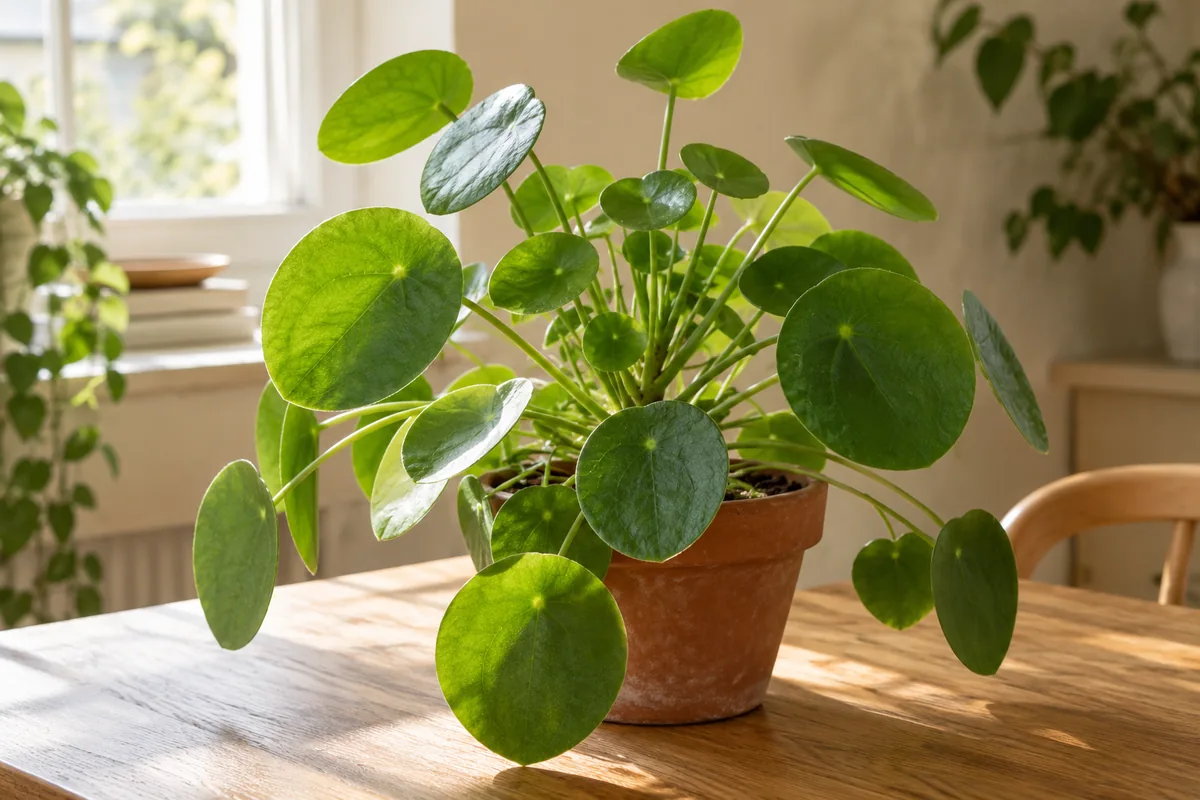
Small round leaves appearing beside a Chinese money plant can look like an instant second plant. Before separating the offset, look at how developed it is and where it joins the parent. Some offsets emerge from the root zone a short distance away, while others sit close to the main stem. A plantlet with several firm leaves and a usable base is easier to handle than a tiny shoot that has only just appeared. Letting it develop a little longer often makes the eventual separation simpler. The goal is not to remove every new shoot as soon as it can be seen, but to choose a section that can establish comfortably on its own.
Prepare a small pot with drainage, suitable lightly moistened houseplant mix, and a clean cutting tool before disturbing the plant. Optional propagation is usually more straightforward during active growth when light and temperature support new roots. Check that the parent is growing steadily rather than adjusting to a recent move or struggling with persistently wet mix. A small offset depends on a limited structure, so starting with firm material matters. Keep the work area clear and support the parent pot while examining the surface. Avoid pulling the plantlet by its leaves to see whether it will release. The round blades and slender stalks are easily damaged by that kind of test.
Gently move a little surface mix aside to locate the connection and any attached roots. If the offset has a useful root system, preserve it as you separate the connecting section with a neat cut where needed. Work carefully around neighboring roots rather than digging a broad trench through the whole container. A close offset may be easier to inspect during a justified repotting of the parent. Do not turn a simple propagation attempt into unnecessary bare rooting merely to reach a very small shoot. If the plantlet is not yet developed enough to handle cleanly, returning the mix and waiting is a practical choice rather than a missed opportunity.
A rooted offset can move directly into its first pot. Choose a container just large enough for its roots with modest fresh space, and make a planting opening before placing it. Guide the roots naturally without sharp folds. Keep the stem base at an appropriate depth and the emerging leaves above the mix. Fill gently around the roots, leaving room below the rim for watering. Heavy compression is not needed to hold a small plant upright; a discreet temporary support can help if it leans. A large decorative planter may look appealing, yet its unused moisture reserve is harder for a tiny pilea to manage than a compact drained nursery container.
An offset with limited roots may be rooted further in a suitable setup before ordinary potting. Water rooting can make progress visible when the stem base is held appropriately and the leaves remain above the surface. Use a clean vessel, maintain clean water, and avoid a narrow opening that will trap later roots. Direct rooting in a suitable medium is another option when moisture can be kept even without saturation. Keep the base stable and inspect it rather than repeatedly lifting it out. The method should fit the material actually separated. A rooted plantlet and a fresh section with little root growth do not require precisely the same immediate care.
Place the new plant in bright filtered light at a stable suitable room temperature. Avoid strong direct sun, cold glass, and direct heating airflow. The small root system benefits from predictable conditions while it establishes contact with its new medium. Water carefully when needed and let surplus leave the pot completely. The surface of a small container can change quickly, so check it often without adding water automatically on every visit. If the lower mix remains moist, another watering may be premature. A clear view of the base makes these decisions easier than a thick decorative surface layer that hides both the mix and the emerging growth.
Watch for firm leaves and gradual new growth over the following weeks. Some older leaves may respond to handling, so evaluate the whole plant and the moisture pattern before changing several conditions at once. Do not feed heavily to force a rapid start. Check whether the mix already contains nutrients and wait for established growth before following an appropriate routine. Avoid tugging the stem to test anchorage. New roots can be disturbed just as they begin to hold. Keep a simple note of the separation date, root condition, and placement so you can judge later progress against the starting point rather than against another offset that began with a larger root system.
Once the pilea is established, let its roots occupy the first pot before increasing the size. Rotate an appropriate container gently during routine care if the plant leans toward the light, while maintaining a suitable exposure. A small plant may develop a pleasing circle of leaves without needing a large volume beneath it. Inspect the parent after the separation as well, returning disturbed surface mix and continuing normal care. Propagation is most manageable when both plants retain a clear root environment. A developed offset, a clean connection cut, and a modest first container provide a practical beginning without requiring an elaborate system or a strict timetable for the next leaf.