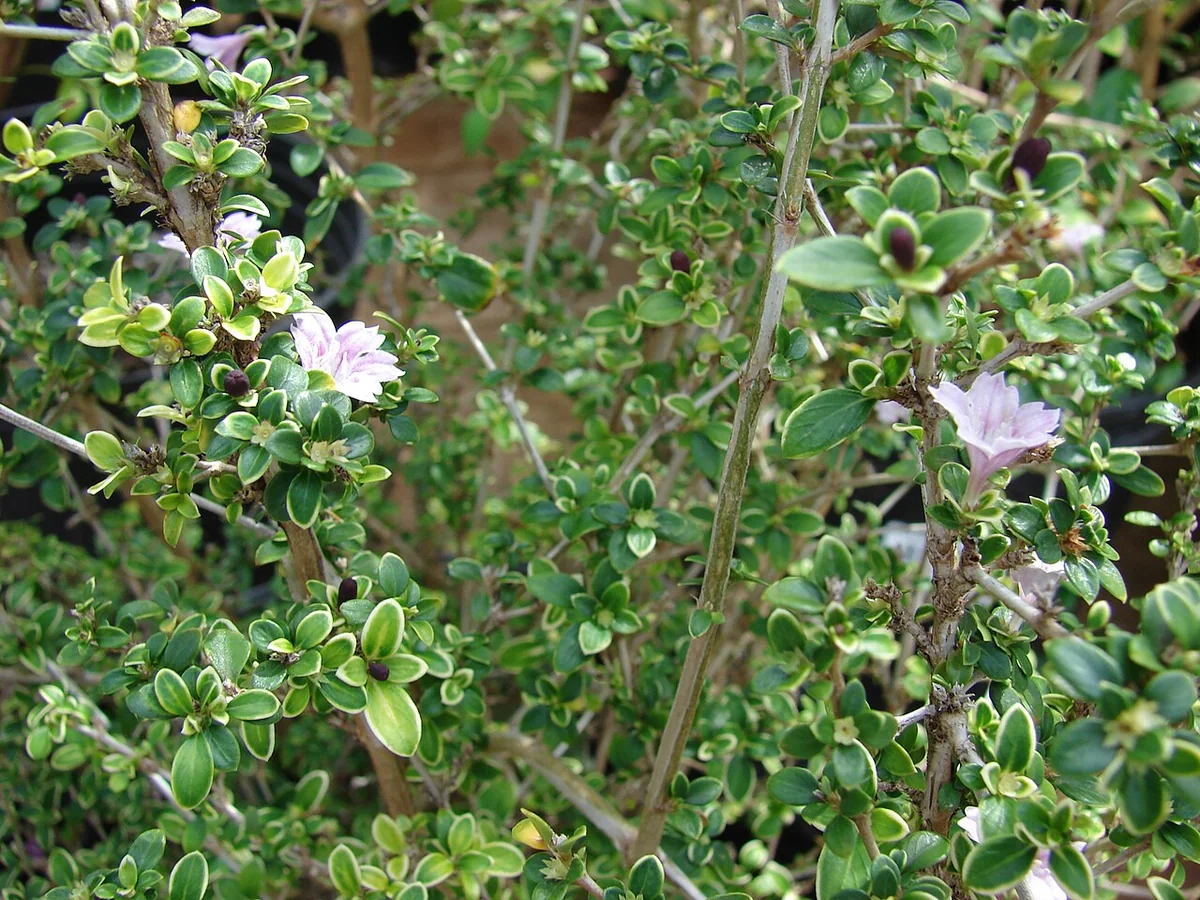
A snowrose is a living bonsai subject
Serissa japonica is often sold as snowrose bonsai because fine leaves and small white flowers can create the impression of a much older tree in a shallow pot. It is a woody plant maintained through horticulture, not a separate naturally miniature species that can remain unchanged on a desk. A bright suitable position and attentive root care are more important than the shape of the decorative container. It may be grown under protected indoor conditions, but it should not be described as an effortless plant for an office where nobody checks moisture over a long weekend.
The species belongs to the coffee family and comes from parts of eastern and southeastern Asia. Older nursery references may use Serissa foetida, a name associated with the odour released when parts of the plant are disturbed. The natural shrub and a trained bonsai are the same kind of living plant, although years of pruning and root management create a different presentation. Variegated or named forms may differ from the plain green specimen in the shop. Keep the supplier's full identification and care history rather than assuming that every small flowering bonsai in a similar pot needs the same treatment.
Choose the address before choosing the pot
Give snowrose abundant usable light while protecting it from abrupt severe exposure changes. A bright window can be suitable, but a tray placed far back on a meeting table is usually not comparable. Check how blinds are used and whether surrounding plants shade the lower branches. If the site lacks adequate light, a properly positioned grow light may be necessary. A plant that is continually moved into a dark room for display and then returned to a hot window may respond badly to the repeated changes. It is easier to understand a tree living in one appropriate stable position.
Warm season outdoor placement can be useful in suitable climates, with acclimation and protection from unsuitable cold. A shallow root container experiences temperature changes quickly, so do not equate the room's general comfort with the conditions at the roots. Keep the tree away from freezing glass and direct heating vents. Where a cool protected winter period is used, it should still provide enough light and appropriate moisture. Snowrose is not an outdoor temperate bonsai to be frozen indiscriminately, nor does its indoor sales label mean that dim constant heat is automatically the ideal year round arrangement.
The shallow pot changes the watering problem
Inspect the actual medium supplied with the tree. Some retail bonsai arrive in dense organic material, while others occupy a much more granular root mix; the two can dry differently. Do not copy another grower's interval without knowing the container and substrate. Water evenly when the root zone begins to need replenishment, letting excess leave through the drainage holes. Avoid repeated total drying of the fine roots. A thin surface layer of moss may be attractive, but it can conceal what is happening below and should not be the only guide used to judge moisture.
Equally, a shallow pot is not an invitation to leave the tree standing in a reservoir. A permanently wet lower layer can damage roots even when the exposed surface appears dry. Learn the weight of the container, check below the top and observe the rate of new growth. If the canopy wilts above damp material, investigate root conditions before adding another drink. A newly acquired tree deserves a period of observation. Abruptly stripping away all its soil because another bonsai photograph uses different granules can cause more disturbance than its current condition warrants.
Shape growth that can support the tree
Pinch or shorten suitable new shoots to maintain the intended outline while leaving enough foliage for the plant to function. Do not continually remove every growing tip merely to keep a showroom silhouette. Identify dead or weak branches and distinguish them from temporarily leafless living wood. Wiring is a separate skilled operation: inspect any nursery wire frequently so it does not cut into thickening bark. A beginner can often maintain a balanced small framework through thoughtful clipping before attempting major bending. The tree's appearance should develop from suitable growth rather than being imposed on a struggling root system.
Repotting and root pruning should be timed to the plant's active growth and carried out with an understanding of the existing roots. A recently stressed specimen is not an ideal practice subject for a severe root reduction. Use a suitable draining bonsai mix and secure the tree so it does not rock while roots establish. Feed lightly as instructed during useful growth, avoiding concentrated fertilizer immediately on damaged roots. Flowers may appear when conditions and the selected plant allow, but an absence of blossoms does not by itself diagnose failure. Firm leaves and continued growth are more useful early measures of adaptation.
Leaf drop needs context
Serissa is known for responding to changes in its environment, and leaf loss after relocation should lead to a review of the whole situation. Check moisture, light, root temperature and recent work before deciding on a response. A dry fine root ball and a saturated one can both produce a poor canopy. Look for pests around leaves and branches, especially when the tree has spent time outside. Avoid adding several new treatments at once. Keeping a simple record of the move, watering and pruning makes it easier to see whether the tree is settling or whether a specific condition still needs correction.
The small scale of a snowrose can carry a personal meaning of attention, practice or patience. Those are reasonable interpretations of the work involved, not proof of a universal spiritual effect from owning bonsai. It can be a considered gift for someone who already wants to learn the craft and has a bright growing position. It is a less considerate surprise for a frequent traveller or a person seeking a maintenance free desk decoration. Discuss who will check the shallow pot during absences. A beautiful container cannot compensate for an owner whose ordinary routine makes timely care impractical.
Give the growing history as well as the tree
Ask the nursery about the medium, any recent root work and the conditions in which the plant was kept. Include that information with the gift, together with its botanical name and the date of any major pruning. A manageable young tree with accessible roots can be more useful than a heavily wired specimen presented as an instant antique. For the first season, concentrate on a stable suitable address, balanced moisture and sustained new growth. Once the tree is functioning well, refinements to shape and flowers have a sounder foundation than they do on a repeatedly moved, newly repotted plant struggling to recover.