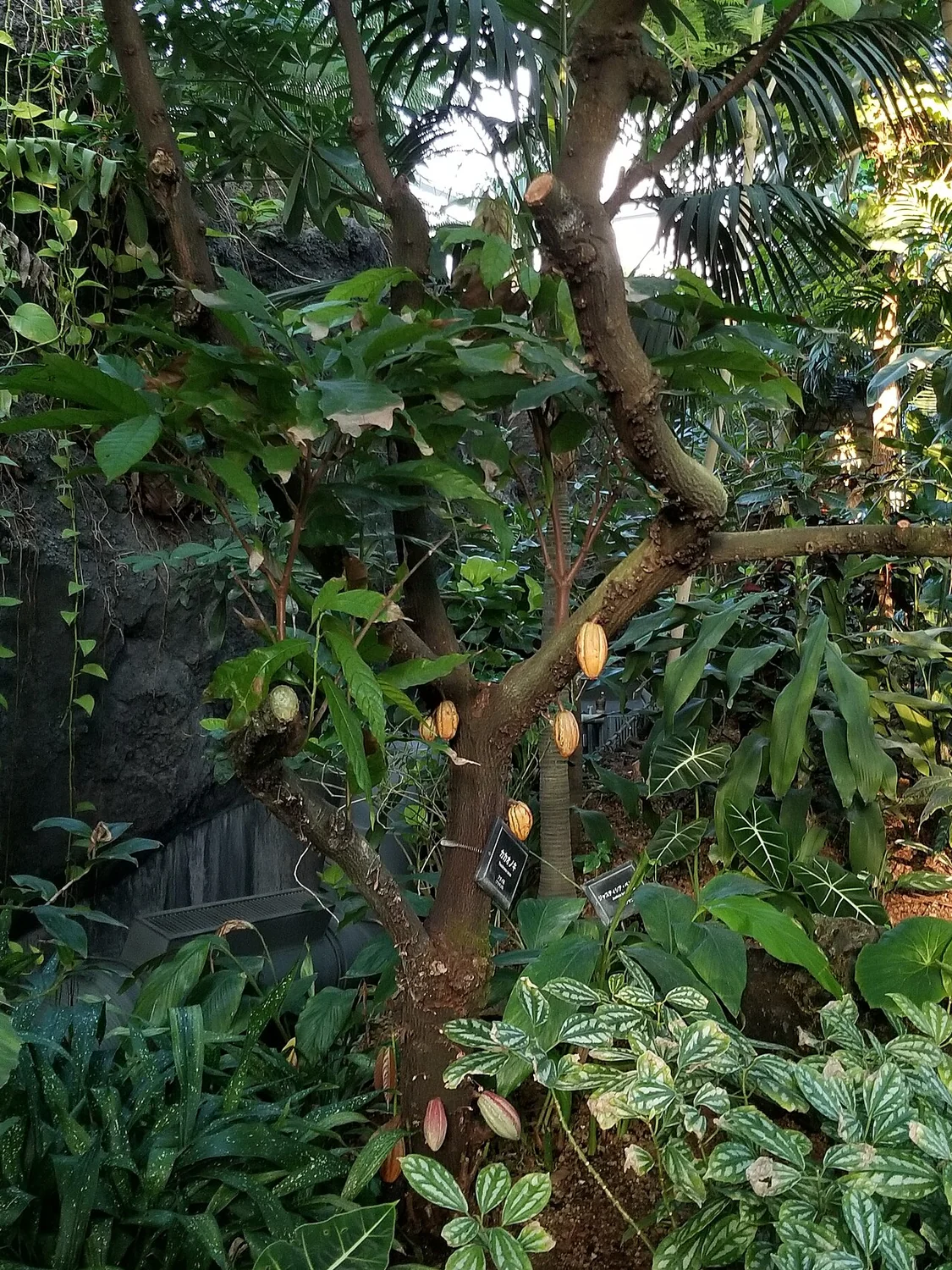
Cacao belongs in a warm humid growing room
Cacao is one of the most revealing trees a botanical enthusiast can grow, because its long leaves and eventual trunk borne flowers connect a familiar food with an unfamiliar living structure. Theobroma cacao is also one of the least suitable choices for an ordinary dry office. It needs a warm humid protected environment with useful filtered light and consistently supplied roots. A young plant can be kept as a conservatory foliage specimen without ever producing a chocolate crop. That is a worthwhile aim. Buying it on the assumption that any heated room will soon produce pods creates expectations that the room may not be able to support.
The crop has origins in the American tropics and a long history of cultivation and use by Indigenous peoples before its later movement around the tropical world. Modern chocolate is the result of processing seeds from cacao pods, not a product that appears ready to eat on a branch. Cultivated groups and selections differ, including in their compatibility for pollination. A nursery seedling should not be presented as a guaranteed copy of a particular producing clone. Preserve the supplier's information. The tree is interesting as a living crop with a complex history even when it is grown purely for leaves and botanical observation.
Filtered light is not deep shade
In nature cacao grows within warm humid forest conditions, but that background should not be translated into a dark indoor corner. Provide bright filtered light, protecting tender young foliage from harsh direct sun while avoiding the weak illumination of a room far from windows. A conservatory needs shading and ventilation that maintain suitable warmth without overheating the leaves. Newly expanding leaves can hang softly and show different colours before they harden, so learn that ordinary growth pattern. A complete canopy losing firmness over dry roots is a different situation from a normal soft new flush.
Warmth must remain reliable around the roots as well as the upper leaves. Cacao is sensitive to cold and should not be given the cool winter treatment used for an olive or bay. An office that turns down its heating sharply at night or during holidays may be unsuitable. Air around the plant should not be a direct stream from a heater, even if the room's average temperature appears acceptable. A purpose managed warm growing room offers more control than a decorative spot beside a draughty door. Assess these conditions before bringing a large leaf specimen into a space where they cannot be changed.
Humidity and root water are different needs
Maintain appropriate air humidity without leaving the tree in stagnant enclosed conditions. A suitable room humidifier may be more effective than briefly misting leaves, but it should be managed for the room and its surfaces as well as the plant. Do not try to create humid air by keeping the drainage holes submerged. Cacao needs steady soil moisture, yet its roots still require drainage and air. Leave enough room around the canopy to observe leaf undersides and the lower trunk. Closely packing a collection can conceal pests and make it difficult to distinguish a humidity issue from a root problem.
Use a fertile moisture retentive but draining container mix and a pot fitted to the actual root system. Keep the established planting depth and avoid allowing a tall young tree to rock in loose medium. Roots should not be repeatedly dried to the extent tolerated by succulent trees. Check within the occupied ball and replenish water evenly when needed, letting excess drain afterward. The interval changes as new leaves expand and conditions shift. If leaves wilt above already wet material, investigate temperature and roots before adding more. A moist lower layer is not made safer by keeping its surface permanently covered and hidden from inspection.
A tree framework before any pod
Cacao develops a particular branching structure as it matures, and a small indoor plant should not be pruned indiscriminately to copy a photograph of a fruiting adult. Remove damaged growth and make necessary height decisions thoughtfully while retaining enough foliage. A container can restrict roots, but it does not make the natural tree scale disappear. Decide what size the growing room can accommodate and where the plant will go if it exceeds that limit. An upright young specimen, a grafted selection and a cutting can also differ in growth behaviour, making propagation history useful information rather than a minor nursery detail.
Flowers may eventually appear on older stems and the trunk, an arrangement called cauliflory. That feature is fascinating even if pods never develop. Pollination and clone compatibility are specialised matters, and some types do not set well from their own pollen. A general instruction to brush any two flowers together is not a dependable promise of success. Do not cut away older flowering cushions simply because they do not resemble leafy shoots. If a pod does develop, support the tree with stable growing conditions rather than attempting to accelerate it with concentrated fertilizer. Flowering and fruiting remain secondary to maintaining a functioning warm climate tree.
Feed growth and observe the leaves
Use measured nutrition suitable for an actively growing container tree, following the product rate and accounting for fertilizer in new medium. A leaf flush may change its use of water and nutrients, but more food cannot correct cold roots or inadequate light. Examine any discoloration through its pattern and the stage of leaf development. Look for insects along undersides and sheltered stem areas while keeping inspection gentle on tender leaves. Avoid a sequence of unrelated treatments in response to one soft new leaf. A record of temperature, watering and growth stages is particularly useful for a species whose ordinary flush can look unfamiliar to a new keeper.
Cacao can be a meaningful gift for a chocolate enthusiast who is also an equipped conservatory grower, a botany student with suitable facilities or someone building a tropical crop collection. Its connection with food history is real, but keeping the tree does not confer a health benefit or guarantee a personal supply of chocolate. The thoughtful message is an invitation to understand the plant behind the food. A recipient with only a dry shaded office is being given a difficult obligation. Ask about warmth, humidity and long term space before selecting the specimen, rather than letting an appealing chocolate themed label make the decision.
Give the growing conditions honestly
Provide the exact name, propagation information and recent care history, and state clearly that pods are uncertain under household conditions. If fruit ever becomes available, handling and processing are separate food subjects requiring reliable guidance; do not improvise from an ornamental display. Choose a container whose drainage and root surface remain accessible. The first success is a tree that can make and harden new leaves in a stable suitable environment. A cacao grown honestly for its botanical interest can be rewarding for years. It does not need a misleading promise that a small indoor pot will behave like a productive tropical plantation.