Cape origins and a soft leafy framework
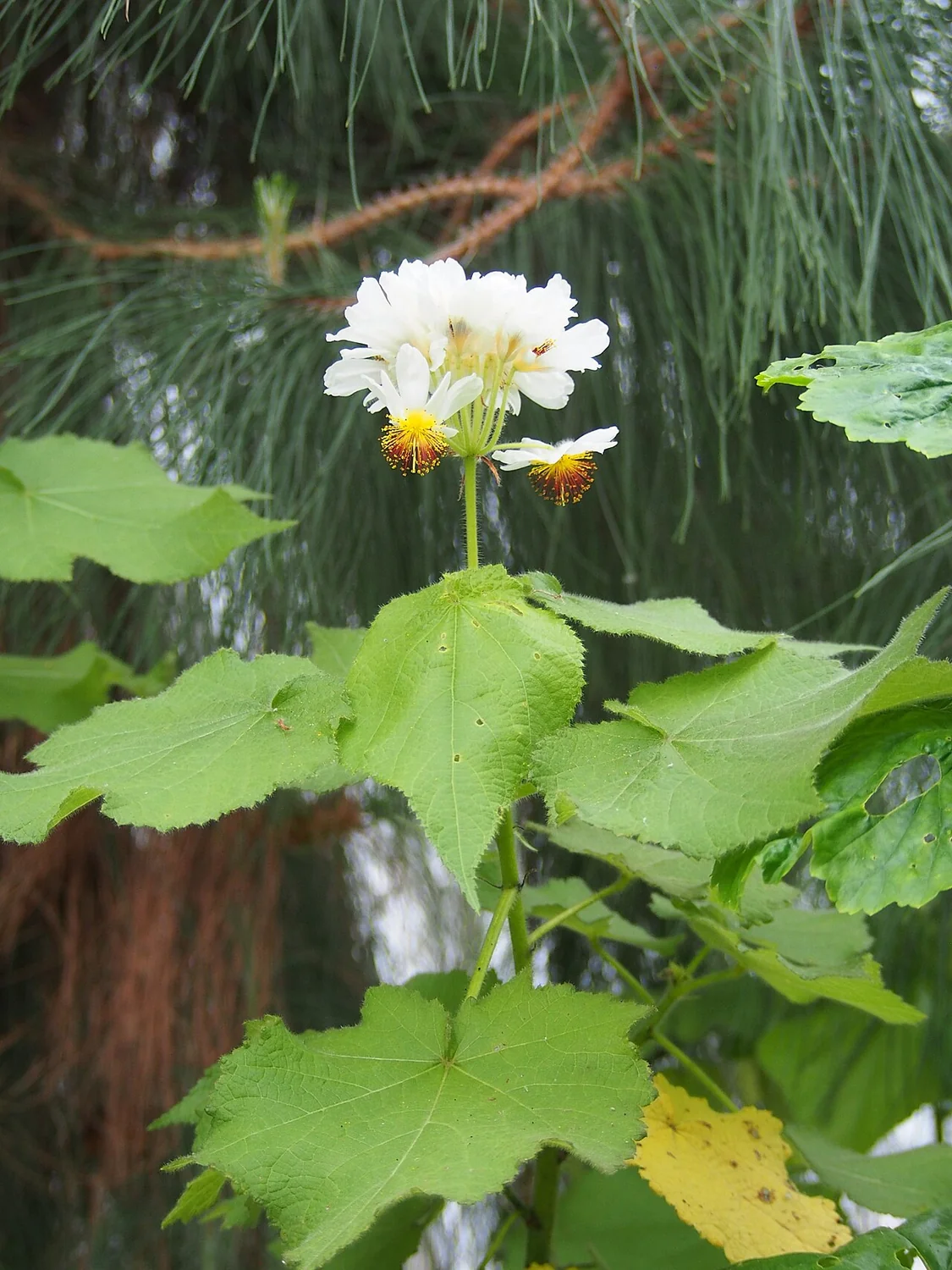
African linden is a soft wooded shrub or small tree whose large heart shaped leaves create a lush canopy very quickly under suitable conditions. Sparrmannia africana comes from southern Africa, including damp forest edges, ravines, and stream associated places along the southern Cape region. It is also known as house lime or African hemp, but those common names do not make it a true linden or the hemp used in other contexts. The leaves and young stems carry bristly hairs, and mature plants can produce white flowers with conspicuous yellow and reddish stamens. A bright ventilated conservatory suits its character better than a hot dark office corner.
The plant has a documented history in European conservatory cultivation. Its genus commemorates Anders Sparrmann, and botanical accounts also explain why both single and double r spellings have appeared in literature. That naming history can be recorded without turning a cultivated specimen into a fictional heirloom. A nursery plant should have firm young branches and a balanced supply of leaves, with the base visible above the mix. Its rapid potential growth deserves space from the beginning. A small pot of soft leaves may soon occupy much more width, and repeated accidental contact can damage foliage as well as irritate sensitive skin through the leaf hairs.
A bright cool growing place
Give it abundant bright light with shelter from severe direct sun, particularly through hot glass. A cool to moderate protected room with ventilation is more convincing than an enclosed overheated space. The large leaves can scorch or wilt when strong exposure and root drying combine. Outdoor shade tolerance should still be interpreted against the lower light levels inside a building. Place the canopy where it receives a useful view of the sky and watch the strength of new stems. Long weak growth is not corrected by pruning alone if illumination remains insufficient. Protect the plant from hard frost and from sustained cold drafts even when it is grown in a cooler room.
Water, roots, and a draining container
Water use can become substantial as the broad canopy expands. Check the root ball frequently during active growth, and water thoroughly when the mix needs it rather than waiting for repeated complete wilting. Let excess drain, because a moist growing preference does not require a stagnant saturated pot. A small container on warm paving or beside sunny glass may dry much faster than expected. Conversely, water use slows when growth and light decline. Yellowing after drought should not be interpreted automatically as hunger, while soft deterioration above wet mix requires a different investigation. The history of the pot's moisture is more useful than the colour of one leaf alone.
Choose a container with enough room for the developing roots and a mix that retains moisture without collapsing. A vigorous plant may need more frequent repotting than a slow indoor conifer, but decisions should still follow roots and watering behaviour. Increase size proportionately and retain the established stem depth. Keep drainage accessible, particularly if a heavy decorative cover is used. The large canopy also needs a stable base so a light pot cannot tip when brushed. Do not compensate for instability simply by surrounding a small root system with an enormous volume of dense wet compost. Practical access for watering matters as much as the appearance of the planter.
Training and ongoing maintenance
Pruning helps prevent a leggy framework and can encourage a denser outline. Plan a more substantial reduction while conditions support recovery, rather than cutting an already stressed plant hard during a dark cold period. Preserve the intended relationship between stems and crown, and use clean suitable tools. Gloves and long sleeves can be useful because the hairs may cause skin irritation in some people. Avoid rubbing eyes after handling the foliage. Suitable stem cuttings can be propagated under controlled conditions, but excess wetting of the leaves during rooting can cause decay. The propagation environment should be adjusted to the actual material rather than copied from a different soft leaved plant.
Good ventilation is particularly valuable around this broad soft canopy. Crowded leaves that remain wet and still can develop fungal problems, while strong drying wind creates another kind of stress. Remove damaged or collapsing material and inspect the undersides for whitefly, mites, scale, or other pests appropriate to the collection. Clean dust without harsh rubbing of the hairy surface. Feed a vigorously growing specimen at an appropriate container rate and account for nutrients already in fresh mix. The species can use more resources during active extension than a slow foliage tree, but fertilizer still cannot replace light, water, or a functioning root system.
Flowers are an additional reason to grow the plant where enough light and seasonal conditions support them. Their mass of stamens can move when touched, a genuine botanical response associated with pollination rather than evidence of animal behaviour or a household benefit. An indoor plant should not be handled repeatedly just to demonstrate the effect. Flowering timing also changes with hemisphere and growing environment, so a month listed for a South African garden is not a universal indoor calendar. Remove spent material when it becomes untidy. A foliage specimen that has not yet bloomed can still be developing satisfactorily if its roots and new growth are sound.
Meaning without unsupported promises
Its real conservatory history makes African linden a meaningful choice for someone interested in older houseplant traditions or the exchange of plants between regions. The name house lime should not transfer every cultural association of European linden trees automatically to this African species. A giver may instead choose the heart shaped leaves as a personal message of affection or welcome, making clear that this is their interpretation. Historical fibre use can be mentioned accurately without suggesting that a potted tree is a practical household fibre crop. The plant's genuine growth, leaf texture, and responsive flowers provide enough interest without claims of healing or guaranteed good fortune.
A gift matched to the recipient
This is an appropriate requested gift for an owner with a bright ventilated conservatory or cool growing room and enough space for rapid leafy development. A new protected garden area, a collection anniversary, or an interest in historical horticulture can provide a fitting occasion. It is less suitable for a narrow hot office or a recipient sensitive to bristly foliage who would need to brush past it daily. Consider children and pets that may handle or chew the leaves. A healthy manageable starting size and a clear label are more useful than a large specimen already outgrowing its pot. Explain the watering access and pruning commitment before the tree arrives.